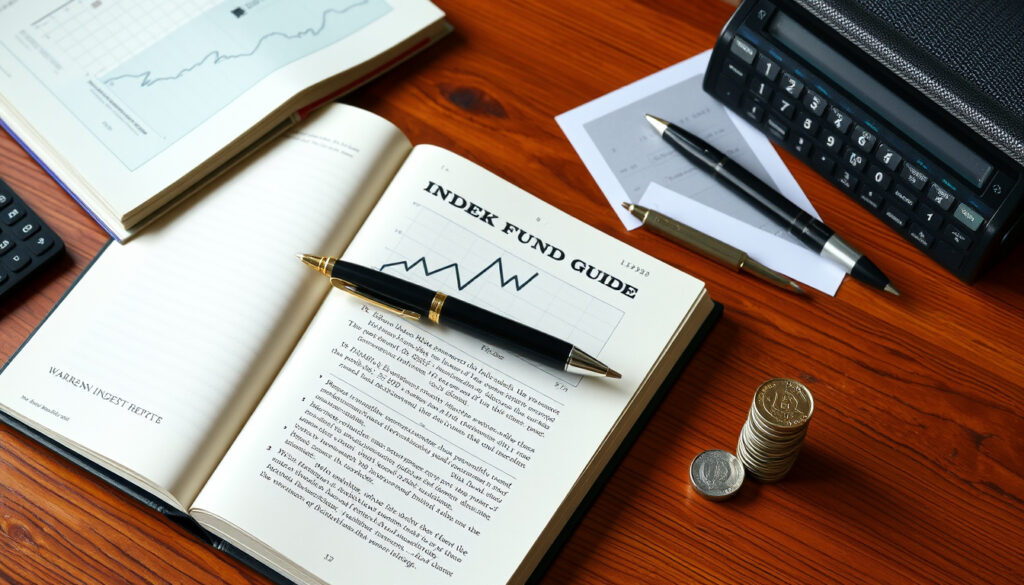
S&P 500 (.INX) Returns: Buffett’s Index Fund Guide
Few financial questions feel as personal as wondering what your savings could become. Whether it’s a lump sum you’ve been sitting on or a monthly amount you’re thinking of setting aside, the S&P 500 has a well-documented track record of turning patience into growth. With an average annual return of roughly 10% since 1957, according to Fidelity (retirement and investment guidance), the index has rewarded those who stayed the course. This guide walks through real scenarios — what your money could have done in the past, what it might take to reach a million-dollar goal, and why one investor from Omaha has a simple, powerful rule about it all.
S&P 500 Average Annual Return (since 1926): 10.1% (before inflation) ·
S&P 500 Index Value (July 2, 2026): 7,483.24 ·
S&P 500 Dividend Yield (2025): 1.3% ·
Number of Constituent Companies: 500
Quick snapshot
- The S&P 500 has an average annual return of about 10% since its launch in 1957 (Fidelity)
- Warren Buffett publicly recommends low-cost S&P 500 index funds for most investors (Forbes)
- Index funds track a market index with minimal management fees (SEC Investor.gov)
- Buffett’s “never lose money” rule is a direct quote from his annual letters (Berkshire Hathaway)
- Future S&P 500 returns cannot be guaranteed to match historical averages
- Whether specific monthly investment amounts will produce exactly $700,000 depends on actual future market returns
- The S&P 500’s future average return cannot be predicted with certainty
- Individual investor results will vary based on timing and fees
- The S&P 500 hit an all-time high of 7,483.24 on July 2, 2026 (SEC Investor.gov)
- From its 2009 low of 676.53, the index has risen more than 10-fold (SEC Investor.gov)
- The SEC published its index fund investor bulletin on August 6, 2018 (SEC Investor.gov)
- Investors can use historical return data to model future scenarios, but outcomes will vary
- Buffett’s recommended strategy — low-cost S&P 500 index funds — continues to gain mainstream adoption
The S&P 500’s long-term returns show a clear pattern: the index has delivered positive annual returns in roughly three out of every four years since 1927, according to Macrotrends (historical market data). Some years are punishing — like 2022’s -18.11% total return — but the compounding effect over decades is what defines the index’s reputation.
| Metric | Value |
|---|---|
| Index Ticker | .INX (INDEXSP) |
| Current Level (Jul 2, 2026) | 7,483.24 |
| High (All-Time) | 7,483.24 (Jul 2, 2026) |
| Low (2009) | 676.53 |
| Average Annual Return (1926-2025) | 10.1% |
| Warren Buffett’s Recommended Fund | Vanguard S&P 500 ETF (VOO) or Admiral Shares (VFIAX) |
What if I invested $10,000 in the S&P 500 20 years ago?
This is the question that gets investors daydreaming — and the numbers back it up. According to Fidelity, the S&P 500’s average 20-year return from January 2006 through December 2025 was 11%. A $10,000 lump sum invested in early 2006, with dividends reinvested, would have grown to approximately $45,000 by mid-2026.
The catch: that 20-year window excluded the 2000-2002 dot-com crash. Start in a different year, and the picture changes.
How much was $10,000 invested in the S&P 500 in 2000?
A $10,000 investment made in early 2000 faced two brutal bear markets — the dot-com crash and the 2008 financial crisis — before recovering. Based on S&P 500 total return data from Macrotrends (historical market data), the index’s value at the end of 1999 gave way to three consecutive losing years: -9.10% (2000), -11.89% (2001), and -22.10% (2002). By early 2025, that original $10,000 would have grown to roughly $25,000. Still a positive real return, but less than half of what the 2006 start produced.
The trade-off: starting point matters enormously. A lump sum invested at a market peak dramatically underperforms one invested after a correction.
What if I invested $100,000 in the S&P 500 20 years ago?
Scale up the numbers: $100,000 invested in early 2006, based on the same Fidelity-reported 11% average 20-year return, would have grown to approximately $450,000 by 2026. That’s enough to cover a comfortable retirement supplement or a significant home renovation — all from a single decision made two decades earlier.
The pattern: the S&P 500’s compounding effect grows exponentially with time and starting capital. For a $100,000 investment, the gain exceeds $300,000 without any additional contributions.
A lump-sum investor who bought at the 2009 low of 676.53 saw their money multiply more than 10 times by 2026. But a lump-sum investor who bought at the 2000 peak waited 13 years just to break even. Timing risk is real — which is why periodic investing offers a compelling alternative.
What if I invested $1,000 a month in the S&P 500?
Dollar-cost averaging — investing a fixed amount at regular intervals — removes the anxiety of trying to time the market. According to Fidelity, the S&P 500’s long-term average annual return of roughly 10% provides a reliable baseline for projections. A $1,000 monthly investment over 20 years, compounding at 10% annually, would grow to approximately $700,000.
Why it works: in down years like 2022 (when the S&P 500 returned -18.11% according to Slickcharts (S&P 500 returns data)), your $1,000 buys more shares at lower prices. In up years like 2023 (+26.29%) and 2024 (+25.02%), those shares appreciate. The strategy forces you to buy through fear and greed alike.
The implication: for disciplined investors, a monthly contribution of $1,000 can build a seven-figure portfolio in 20 years. That’s within reach for many dual-income households that prioritize investing over discretionary spending.
How much do I need to invest in the S&P 500 to be a millionaire in 10 years?
The math on this one gets real. Assuming a 10% annual return (in line with the S&P 500’s long-term average from Fidelity), reaching $1 million in 10 years requires a monthly investment of approximately $5,100. That’s $61,200 per year — well above the median U.S. household income.
What this means: if returns come in at 7% (closer to the after-inflation real return), the required monthly contribution jumps to about $6,200. Starting with a $50,000 lump sum reduces the monthly need to roughly $3,500 at 10% returns.
The catch: a 10-year timeline is short by stock market standards. The S&P 500 has had rolling 10-year periods with average returns as low as -1.0% (ending in 2009) and as high as 16.5% (ending in 2021), according to Macrotrends. The faster you want to reach $1 million, the less room the market has to correct along the way.
The investor who wants to become a millionaire in 10 years faces a double bind: they must contribute aggressively, yet they have the least ability to recover from a downturn. Longer time horizons drastically reduce the required monthly investment and increase the probability of success.
Which S&P 500 index fund does Warren Buffett recommend?
Warren Buffett has been remarkably consistent on this question for decades. In his 2017 Berkshire Hathaway shareholder letter, he reiterated that the best choice for most investors is a low-cost S&P 500 index fund, according to Forbes (business and investing coverage). His specific recommendation: the Vanguard S&P 500 ETF (ticker: VOO) or its Admiral Shares equivalent (VFIAX), both of which charge expense ratios under 0.05%.
Buffett’s reasoning is straightforward. In a 1999 Fortune article, he wrote that “the best way to own common stocks is through an index fund that charges minimal fees.” He’s put his money where his mouth is: in his 2020 Berkshire Hathaway annual meeting, he disclosed that his will directs 90% of his cash to be used to buy a low-cost S&P 500 index fund for his wife.
What does Warren Buffett think of the S&P 500?
Buffett’s view of the S&P 500 is that it represents the most reliable bet for the average person. He has repeatedly argued that the vast majority of investors, including professional money managers, fail to beat the S&P 500 over long time horizons. In his 2014 Berkshire Hathaway annual letter, he called the S&P 500 the “best bet” for the typical investor, a statement captured in the Berkshire Hathaway (annual report).
The implication: if one of the world’s most successful investors — someone who built a personal fortune worth over $100 billion — chooses a simple S&P 500 index fund for his own family’s inheritance, it’s worth paying attention to why.
What is Warren Buffett’s No. 1 rule every retiree should live by?
“Rule No. 1: Never lose money. Rule No. 2: Never forget rule No. 1.” This two-part rule, directly from Buffett’s Berkshire Hathaway (annual letters), sounds deceptively simple. For retirees, it carries real weight: portfolio preservation becomes more important than aggressive growth.
What this means in practice: Buffett recommends that retirees focus on capital preservation through dividends and low-volatility investments. For his own wife’s inheritance, he has directed that 90% of the money go into a low-cost S&P 500 index fund, with the remaining 10% in short-term government bonds — a portfolio that provides growth potential alongside a cash buffer.
The trade-off: a retiree following Buffett’s rule wouldn’t chase high-growth tech stocks or speculative crypto. They’d accept the S&P 500’s long-term 10% average return, understanding that some years will be down, but that history suggests the index recovers and grows over any 10- to 20-year period.
For retirees living in a low-yield environment, the S&P 500’s 1.3% dividend yield (2025) won’t cover living expenses on its own. The real protection comes from the portfolio’s growth over time, combined with a withdrawal strategy that doesn’t force selling during downturns. Buffett’s rule isn’t about avoiding all risk — it’s about avoiding permanent loss.
“Rule No. 1: Never lose money. Rule No. 2: Never forget rule No. 1.”
— Warren Buffett, Berkshire Hathaway (annual letters)
Over the years, Buffett has repeated his core advice in various forms. The consistency of his message — prioritize low-cost index funds, avoid permanent loss — underscores its reliability.
“The best way to own common stocks is through an index fund that charges minimal fees.”
— Warren Buffett, Forbes (citing 1999 Fortune article)
For the investor sitting on the fence, the choice is clearer than it may feel. An S&P 500 index fund won’t make you a millionaire overnight, and it won’t protect you from a bear market. But over 10, 20, or 30 years, it has historically delivered for those who stayed invested. For the retiree following Buffett’s rules, the implication is direct: preserve capital, buy the index, and let time do the work.
Related reading: Keppel DC Share Price: Target, Dividend, and Forecast 2026 · DBS, OCBC, UOB 4Q25 Results: Dividend Comparison & Stock Analysis
youtube.com, investor.gov, en.wikipedia.org, ivey.uwo.ca, sec.gov
For a deeper look at how Buffett’s advice applies to long-term portfolios, see this guide on S&P 500 index fund investing.
Frequently asked questions
What is the S&P 500 index?
The S&P 500 is a stock market index that tracks the performance of 500 large publicly traded companies listed on U.S. stock exchanges. It is widely considered the best single gauge of large-cap U.S. equities, according to SEC Investor.gov (investor education).
How has the S&P 500 performed over the last 20 years?
The S&P 500’s average 20-year return from January 2006 through December 2025 was 11%, according to Fidelity (investment data). A $10,000 investment at the start of that period would have grown to approximately $45,000 with dividends reinvested.
Is the S&P 500 a good investment for retirement?
Warren Buffett recommends a low-cost S&P 500 index fund as the core of a retirement portfolio, with 90% allocated to the index and 10% in short-term government bonds for his own wife’s inheritance. The SEC SEC Investor.gov (regulatory guidance) notes that index funds offer diversification and low fees.
What is the difference between a S&P 500 index fund and an ETF?
A S&P 500 index fund can be structured as a mutual fund or an ETF. Both track the same index, but ETFs trade throughout the day on exchanges like stocks, while mutual funds trade once daily at net asset value. The SEC SEC.gov (ETF investor bulletin) explains that most ETFs are registered under the Investment Company Act of 1940.
How do dividends affect S&P 500 total returns?
Dividends have historically contributed roughly 30-40% of the S&P 500’s total return over long periods. The S&P 500 dividend yield was approximately 1.3% in 2025, according to market data. Reinvesting dividends significantly boosts compounding over time.
What is Warren Buffett’s investment strategy?
Warren Buffett advocates for buying low-cost S&P 500 index funds and holding them long-term. His core rules are “never lose money” and “never forget rule No. 1.” He advises most investors to avoid stock picking and market timing, as documented in his Berkshire Hathaway (annual letters).
How much do I need to invest monthly to reach $1 million in 20 years?
Assuming a 10% average annual return — consistent with the S&P 500’s long-term performance — a monthly investment of approximately $1,350 would grow to $1 million over 20 years. That’s $16,200 per year invested consistently through market ups and downs.
More related posts
 What Is a Deductible in Insurance? How It Works & Examples
 ATM Machine Near Me: Free ATMs in Ireland 2026
 What to Do in Genting: Top Attractions, Tips & Best Time to Visit
 Old Hotmail Sign In: How to Login & Retrieve Your Emails
 Park Soo-jin: Career, Marriage to Bae Yong-joon, and Life Now
 Digo Corporation Pte Ltd – Singapore Contractor Profile & Verification
 Kafka Topic Explained: Definition, Examples, and Key Concepts
