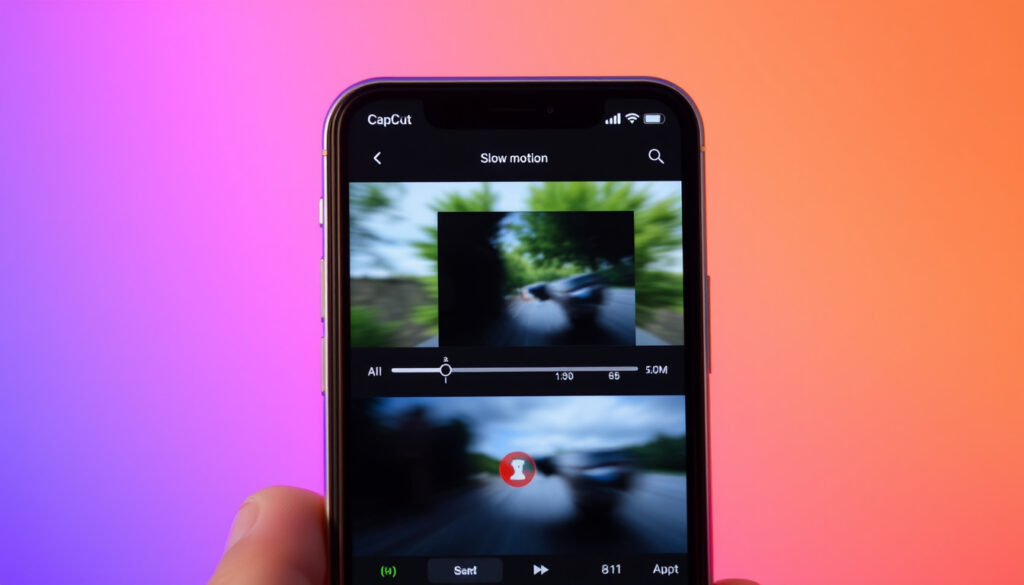
How to Use Slow Motion CapCut Template Free in 2025
Anyone who has watched a slow-motion clip on social media knows how it can turn an ordinary moment into something cinematic. CapCut’s free slow motion templates let you achieve that polished look without any editing experience, and this guide walks you through using both pre-designed templates and manual speed controls.
Monthly Active Users: Over 200 million ·
Available Slow Motion Templates: Thousands ·
Export Resolution: Up to 4K ·
Watermark on Free Exports: None ·
Platforms Supported: Mobile, Desktop, Web
Quick snapshot
- Instant professional look (CapCut)
- No manual speed adjustment needed (CapCut)
- Regularly updated with trending styles (CapCut)
- Open CapCut and tap ‘Templates’ (CapCut)
- Search for slow motion (CapCut)
- Select template and tap ‘Use’ (CapCut)
- Free: unlimited templates, no watermark (CapCut)
- Pro: additional effects, higher export quality (CapCut)
- Pro subscription optional (CapCut)
Six key facts at a glance: the essentials of using slow motion on CapCut across devices.
| Attribute | Value |
|---|---|
| Software | CapCut |
| Platforms | iOS, Android, Windows, Mac, Web |
| Price | Free (with optional Pro subscription) |
| Watermark on Free Exports | No |
| Max Export Resolution | 4K |
| Slow Motion Speed Range | 0.1x to 100x |
How to use CapCut template slow motion?
Finding slow motion templates in CapCut
CapCut organizes its ready-made effects in the Explore section. You can find slow motion templates by opening the app, tapping Templates at the bottom, and searching for terms like “slow motion” or “slow mo.” The CapCut official slow motion template gallery shows dozens of curated options, each described as suitable for beginners and experienced creators alike.
CapCut’s template search works like a discovery feed. The app surfaces trending slow motion templates based on user activity, so checking back weekly can reveal new styles.
Applying a slow motion template to your video
Once you find a template you like, tap it to preview. Then hit the Use Template button – CapCut automatically imports your selected clips into the template’s timeline. According to CapCut’s Super Smooth Slow Motion page, no technical skills are required; you simply upload footage, apply the effect, and get results in seconds.
Customizing the template speed and effects
After applying a template, you can still tweak individual clip speeds. Tap a clip on the timeline, select Speed, and adjust the slider. The CapCut PC tutorial on YouTube shows that Smooth Slow Mo options include Frame Blending and Optical Flow – Optical Flow delivers smoother motion but takes longer to process.
“Optical Flow provides better quality but takes time to process.”
— CapCut PC Tutorial on YouTube
“No technical skills are required; you simply upload footage, apply the effect, and get results in seconds.”
— CapCut’s Super Smooth Slow Motion Page
The implication: mastering template customization gives even novice users professional-grade results.
Is CapCut slow motion free to use?
CapCut pricing model
CapCut is free to download from the App Store and Google Play. The app offers thousands of slow motion templates without requiring a subscription. A CapCut template detail page for an 8K Quality Slow-mo template confirms that these items are available as part of the template system.
Free features vs Pro
The free tier includes unlimited access to templates, manual speed controls, and a wide range of effects. CapCut Pro (optional) unlocks advanced features like higher export resolutions, premium effects, and removal of the occasional pro-only watermark on certain exports. CapCut’s official template page repeatedly emphasizes that templates are free and watermark-free, though the page does not specify regional pricing variations.
Watermark policy
Free exports from CapCut do not carry a watermark. This is a significant advantage over many competing free video editors. Pippit, a CapCut-adjacent template platform, also highlights free access to CapCut-inspired templates, reinforcing the value proposition.
For creators on a budget, CapCut’s free tier eliminates two common obstacles: cost and watermark clutter. You can produce high-quality slow motion content without spending a cent or slapping a logo on your work.
How do I slow down the speed of a clip in CapCut?
Accessing the speed adjustment tool
On mobile, tap the clip in the timeline, then tap Speed at the bottom toolbar. A CapCut mobile tutorial on YouTube shows the exact path: click the video, then Speed, then Curve, then Custom to access the slo-mo curve editor. On desktop, the process is similar – right-click the clip and choose Speed.
Setting custom slow motion speed
CapCut supports speed from 0.1x (one-tenth normal) up to 100x. For slow motion, values between 0.2x and 0.5x are typical. The mobile tutorial demonstrates that lowering the dots on the custom curve reduces speed, while raising them increases speed. CapCut also offers optical flow interpolation to smooth out the frames when you slow down severely.
Preserving audio pitch when slowing down
When you reduce speed, audio pitch naturally drops. CapCut includes a Preserve Pitch toggle in the Speed settings. From the CapCut PC tutorial, we know that enabling this option keeps voices and music sounding normal even at very low speeds.
The catch: neglecting audio pitch can ruin an otherwise smooth slow-motion clip.
Can you change the speed of a CapCut template?
Understanding template constraints
Yes, you can modify the speed of any clip within a template. When you apply a template, CapCut loads each clip as an editable layer. CapCut’s official template page describes templates as a starting point, not a lock-in.
Adjusting speed after template application
After applying a template, tap any clip in the timeline and select Speed as you would with a regular clip. The mobile tutorial shows that the custom curve editor works the same way inside a template. This means you can override the template’s default speed for individual segments.
Limits on speed modification
Some templates may have locked speed settings on certain clip layers (e.g., the background clip in a multi-layer template). In most cases, you can still unlock or detach the layer. However, if the template uses a pre-rendered slow-motion clip, adjusting speed further may cause artifacts. CapCut’s template description suggests that AI-enhanced templates may have limited editability.
Speed changes work on most template clips, but pre-rendered effects inside some templates may reset when you adjust the speed. Always preview the final result before exporting.
What this means: while template modification is powerful, it requires caution with complex templates.
How do I get slow motion on CapCut?
Using pre-made slow motion templates
The fastest method is to use a ready-made template. Open the Templates tab, search “slow motion,” select one, and tap Use Template. CapCut’s Explore page emphasizes that this method requires zero editing skill.
Manually slowing down a clip
- Open CapCut and import your video.
- Tap the clip in the timeline, then select Speed.
- Drag the slider to adjust the speed (0.1x to 100x).
- For extreme slow motion (below 0.3x), enable Optical Flow from the Speed menu.
- Preview the effect and adjust further if needed. (CapCut PC tutorial recommends this for smooth results)
Applying slow motion effects
Beyond speed, CapCut offers effects like Glitch or Blur that complement slow motion. A Super Smooth Slow Motion template page shows that many templates combine slow motion with cinematic overlays. You can add these effects manually from the Effects panel after slowing down your clip.
What is confirmed and what remains unclear
Confirmed facts
- CapCut is free to use
- Slow motion templates are available
- No watermark on free exports
- Speed can be adjusted manually from 0.1x to 100x
What’s unclear
- Exact number of slow motion templates available
- Future changes to pricing or watermark policy
- Effectiveness of optical flow on all devices
For more CapCut-related content, see our guide on how to transfer contacts to a new phone and the iOS 26 release date and features.
For more options, you might explore other slow motion CapCut templates that offer a wider range of effects.
Frequently asked questions
How to remove watermark from CapCut slow motion video?
Free exports from CapCut do not have a watermark. If you see a watermark, check that you are using the app’s export option rather than a third-party exporter.
Can I use slow motion templates on CapCut web?
Yes, CapCut’s web editor at capcut.com supports templates, though the selection may differ from the mobile app.
How to save a slow motion CapCut template to favorites?
On the template detail page, tap the heart icon or bookmark button. Your saved templates appear in the “Favorites” tab.
What slow motion CapCut templates are trending in 2025?
Trending slow motion templates often feature cinematic transitions and music. Check CapCut’s Explore section weekly for the latest.
How to make a slow motion video go viral with CapCut?
Use trending soundtracks, keep clips under 15 seconds, and pair slow motion with a surprising visual moment. Consistency and hashtags help.
Does CapCut slow motion work on old videos?
Yes, you can import any video from your gallery. Quality depends on the original footage’s frame rate – higher frame rates yield smoother slow motion.
How to add music to a slow motion CapCut template?
If the template already has music, you can replace it by tapping the audio track and choosing your own song. CapCut’s library offers free tracks.
Can I use CapCut slow motion templates on PC for free?
Yes, the desktop version of CapCut is free and includes template support. Visit capcut.com to download.
More related posts
 Digo Corporation Pte Ltd – Singapore Contractor Profile & Verification
 Cross Street Medical Clinic STD Testing Guide
 Is Influenza A Contagious? Spread, Risks & Isolation Guide
 Mount Alvernia Shuttle Bus: Free Timetable & Routes
 Jimmy Kimmel Suspended Over Charlie Kirk Comments: Fallout
 Sonic the Hedgehog 3: Box Office, LGBTQ, and Future Sequels
 Budget 2026 Christmas Bonus: Who Gets It & How Much
 Singapore Bank Interest Rates 2026: Best Savings & Fixed Deposit
