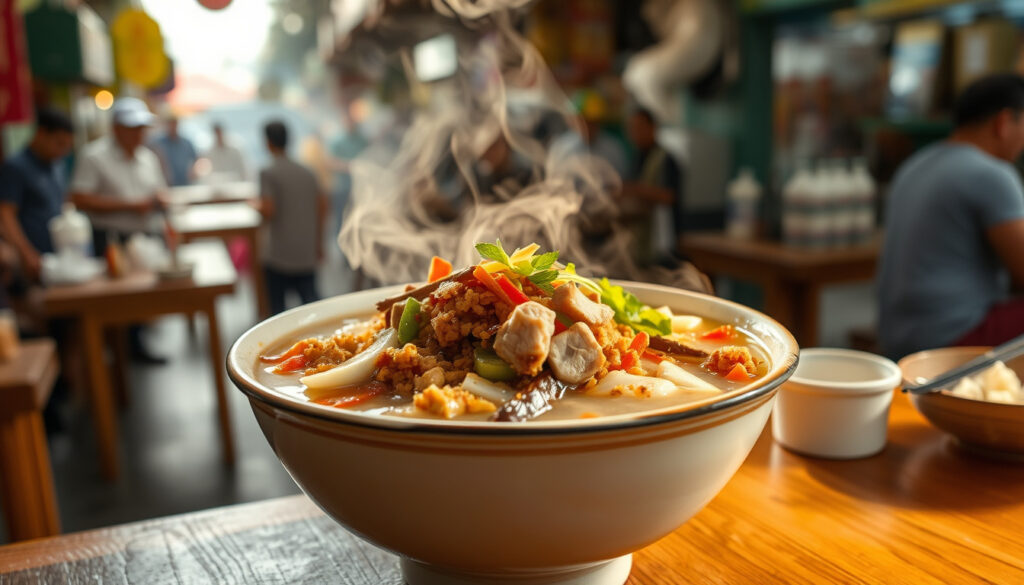
White House Teochew Porridge: A Singapore Comfort Food Staple
There’s something about a bowl of plain rice porridge that feels like home. White House Teochew Porridge, tucked away at 1096 Serangoon Road in Boon Keng, has been quietly serving that feeling since the 1990s — a family-run stall where the porridge stays thin and the side dishes steal the show. This guide cuts through the blog posts to explain what authentic Teochew porridge actually is, how to tell it apart from Cantonese congee, and what makes this stall worth the trip.
Location: 1096 Serangoon Road, Singapore 328193 · Opening Hours: 11:00 AM – 11:00 PM daily · Payment Methods: CDC, PayNow, Visa, MasterCard · Must-Order Dish: Braised Pork Belly, Hae Bee Hiam · Average Meal Cost: SGD 10–15 per person
Quick snapshot
- Located at 1096 Serangoon Road (White House Teochew Porridge official site)
- Open daily 11am–11pm (official site) (White House Teochew Porridge official site)
- Signature braised dishes use a 12-spices sauce (official site) (White House Teochew Porridge official site)
- Exact year of establishment (the stall says “since the 90s”)
- Full menu prices for all items (prices vary seasonally)
- Detailed nutritional breakdown per serving
- Whether the braised pork belly recipe has changed over the years
- Family-run since the 1990s (official site) (ieatishootipost food blog)
- Moved to current location around 2019 (ieatishootipost food blog)
- Hours have shifted over time (10:30am–10:30pm in 2019 vs 11am–11pm today) (The Ranting Panda food blog)
- Look for seasonal specials like steamed fish (Eatbook review)
- Delivery options expanding (check GrabFood) (Eatbook review)
- No plans announced for new outlets (Eatbook review)
Teochew porridge has a distinct profile that sets it apart from other rice porridges.
| Type | Rice porridge |
| Origin | Chaozhou (Teochew region), China |
| Main Ingredient | Rice and water |
| Texture | Thin with separate grains |
| Typical Sides | Braised meats, salted vegetables, seafood |
| Popular In | Singapore, Malaysia, China, Thailand |
What Is a Teochew Porridge?
Definition and Origins
- Teochew porridge, known as moey in Teochew dialect, is a thin rice porridge where the grains remain distinct and separate — not mushy like Cantonese congee (Wikipedia – Congee).
- Originating from the Chaoshan region in Guangdong, China, it spread across Southeast Asia with Teochew diaspora communities, especially in Singapore and Malaysia.
- Traditional accompaniments include braised meats, salted vegetables, and seafood — served as a meal rather than a breakfast dish.
Key Characteristics of Teochew Porridge
- The rice-to-water ratio is low — typically 1:10 or even 1:12 — resulting in a watery, soup-like consistency.
- Grains are cooked just until tender but not split, so you can see individual ovals of rice.
- It’s almost always eaten with a spread of savory side dishes, making it a communal, family-style meal.
The implication: Teochew porridge is best appreciated as a canvas for bold flavors, not as a standalone dish.
What Is the Difference Between Cantonese Porridge and Teochew Porridge?
Cantonese congee uses long simmering and constant stirring to break down rice into a creamy paste. Teochew porridge stops short, preserving each grain. The result: a lighter, more refreshing bowl that doesn’t glue your chopsticks together.
Three key contrasts separate these two iconic rice porridges.
| Attribute | Teochew Porridge | Cantonese Congee |
|---|---|---|
| Cooking method | Simmer rice in high water ratio; no stirring; stop before grains break | Simmer with constant stirring until grains disintegrate into a thick paste |
| Texture | Thin, watery, with whole grains visible | Thick, creamy, smooth |
| Serving style | Porridge in one bowl; side dishes in separate plates | Congee often topped with meat, fish, or egg directly |
| Common accompaniments | Braised pork, duck, salted egg, pickled vegetables, hae bee hiam | Century egg, shredded chicken, fish slices, pork balls |
| Origin region | Chaozhou, Guangdong | Canton (Guangzhou), Guangdong |
The implication: if you want a gentle, hydrating meal that lets side dishes shine, Teochew porridge wins. If you prefer a one-bowl meal where everything is stirred together, Cantonese congee is the classic.
How to Make Teochew Porridge?
Making authentic Teochew porridge at home is deceptively simple — the technique matters more than the ingredients.
Basic Ingredients
- 1 cup jasmine rice (or any white rice)
- 10–12 cups water
- Pinch of salt (optional)
Step-by-Step Cooking Process
- Rinse the rice thoroughly until water runs clear to remove excess starch.
- Boil water in a large pot, then add rinsed rice. Bring back to a boil.
- Simmer uncovered over medium-low heat for 20–30 minutes, stirring occasionally but not vigorously.
- Check texture: grains should be tender but still hold their shape — the porridge should be watery, not thick. If too thick, add hot water.
- Season lightly with salt or chicken stock granules if desired.
- Serve immediately with a selection of sides.
Tips for Perfect Porridge
- Use leftover rice for faster cooking — simmer for only 10 minutes.
- For extra flavor, add a slice of ginger or a dash of sesame oil.
- The best accompaniments: braised pork belly, salted vegetables, fried shallots.
Most home cooks overcook their rice porridge into mush. The difference between a so-so bowl and a great one is pulling it off the heat while the grains still have structure — that’s the Teochew way.
The pattern: mastering the grain structure is what separates a proper Teochew porridge from a generic rice soup.
Is Teochew Porridge Healthy?
Nutritional Profile
A plain bowl of Teochew porridge (about 300g) contains roughly 130–150 calories, less than 1g fat, and minimal protein. The real nutrition comes from the side dishes.
Health Benefits
- Easy to digest: the gentle cooking partially breaks down starches, reducing gastric work (Harvard Health – Gut health).
- Hydrating: high water content supports fluid intake.
- Low calorie: plain porridge alone is a light option for weight management.
Potential Drawbacks
- Sodium load: side dishes like braised duck and salted vegetables are high in salt — one serving can exceed 1,000mg sodium (American Heart Association – Sodium guidelines).
- Low protein: without sides, porridge provides almost no protein or fiber.
Porridge itself is healthy. But the traditional dining experience pairs it with heavy braised dishes — meaning the total meal can pack as much salt and fat as a fast-food burger. Moderation matters.
The catch: the sides can undermine the health benefits, so choose wisely.
What to Expect at White House Teochew Porridge?
Location and Operating Hours
The stall is at 1096 Serangoon Road, Singapore 328193, in the Boon Keng area. It’s open daily from 11:00 AM to 11:00 PM according to the official site (family-run stall). Earlier reviews listed different hours, so current schedule may vary.
Must-Try Dishes
- Braised pork belly (S$12+ per portion) — deep-fried for extra crispiness, then braised in a 12-spices sauce (official site)
- Hae bee hiam (spicy dried shrimp sambal) at S$3+ — a flavor bomb for the porridge (Eatbook review)
- Braised duck — quarter portion from S$15 (DanielFoodDiary 2025 review)
- Otah (spiced fish cake) at S$7+ (Eatbook review)
Price Range and Payment
A meal for two with porridge, braised duck, pork belly, and a side averages SGD 10–15 per person. The stall accepts CDC vouchers, PayNow, Visa, and MasterCard.
One 2019 review reported a total bill of S$28.10 for a solo feast (The Ranting Panda food blog).
Customer Reviews Summary
- “A family Teochew porridge place serving simple and comforting food cooked from the heart” (White House Teochew Porridge Instagram bio)
- “My must order dishes would be the braised pork belly, hae bee hiam” (ieatishootipost food blog)
- The black bean sauce was described as among the best the reviewer had encountered (ieatishootipost food blog)
The verdict: White House delivers exactly what its name promises — a reliable, unfussy meal.
Confirmed Facts vs What’s Unclear
Confirmed facts
- Address: 1096 Serangoon Road, Singapore 328193 (official site)
- Open 11am–11pm daily (official site)
- Signature braised dishes use a 12-spices sauce (official site)
- Accepts CDC, PayNow, Visa, MasterCard (official site)
What’s unclear
- Exact year of establishment
- Complete menu prices (seasonal variation)
- Nutritional breakdown per serving
- Whether the braised pork belly recipe has changed since opening
What People Are Saying
“A family Teochew porridge place serving simple and comforting food cooked from the heart.”
— White House Teochew Porridge (Instagram bio)
“My must order dishes would be the braised pork belly, hae bee hiam.”
For Singaporeans who grew up eating moey with braised duck and salted vegetables, White House is a time capsule. For newcomers, it’s an affordable introduction to a cuisine that prioritizes depth of flavor over flash. The choice is clear: go hungry, order the pork belly, and let the porridge do its quiet work.
drearyweary.com, peepor.net, madewithlau.com, youtube.com, facebook.com, tiktok.com, teochewmuay.com, rotinrice.com
Frequently asked questions
Can I make Teochew porridge in a rice cooker?
Yes. Use a 1:10 rice-to-water ratio and select the porridge setting. Cook for 20–25 minutes and check grain texture — you may need to add more water if it gets too thick.
Is Teochew porridge gluten-free?
Yes, plain rice porridge is naturally gluten-free. However, side dishes like braised meats may contain soy sauce, which contains wheat. Check with the stall if you have celiac concerns.
What are the best side dishes for Teochew porridge?
Classic pairings include braised pork belly, braised duck, salted egg, pickled mustard greens, hae bee hiam (spicy dried shrimp), and stir-fried vegetables.
How many calories are in a bowl of Teochew porridge?
A plain 300g bowl contains roughly 130–150 calories. Add sides and the total meal can range from 400–800 calories depending on choices.
Does White House Teochew Porridge offer delivery?
Yes, the stall is available on GrabFood. Check the app for current availability and delivery fees.
Is there parking near White House Teochew Porridge?
The stall is along Serangoon Road with limited street parking. Nearby public carparks are available at Boon Keng Market and along Balestier Road.
How is Teochew porridge different from Japanese okayu?
Okayu is thicker, often made with a higher rice-to-water ratio, and is seasoned simply with salt or umeboshi. Teochew porridge is much thinner and served as a base for savory side dishes.
Can I freeze Teochew porridge?
It’s not recommended. The rice grains will break down further upon thawing, turning the porridge into a starchy paste. Fresh is best.
More related posts
 Pet Store Near Me – Northern NJ Locations Open Now
 Kub Kao Kub Pla: Meaning, Menu, and Michelin Status
 Ultherapy Before and After: Real Results, Cost & Side Effects
 How to Save Money: 5 Simple Rules and Strategies
 ICC T20 World Cup 2026: Hosts, Pakistan’s Super Eight, Schedule
 NTU mistakenly sent S$9,000 to student, 12-week jail term
 Singapore’s First Human Bovine TB Case: Raw Milk Risk
 Chico Loco Amoy Street: Mexican Rotisserie & Bar Guide
