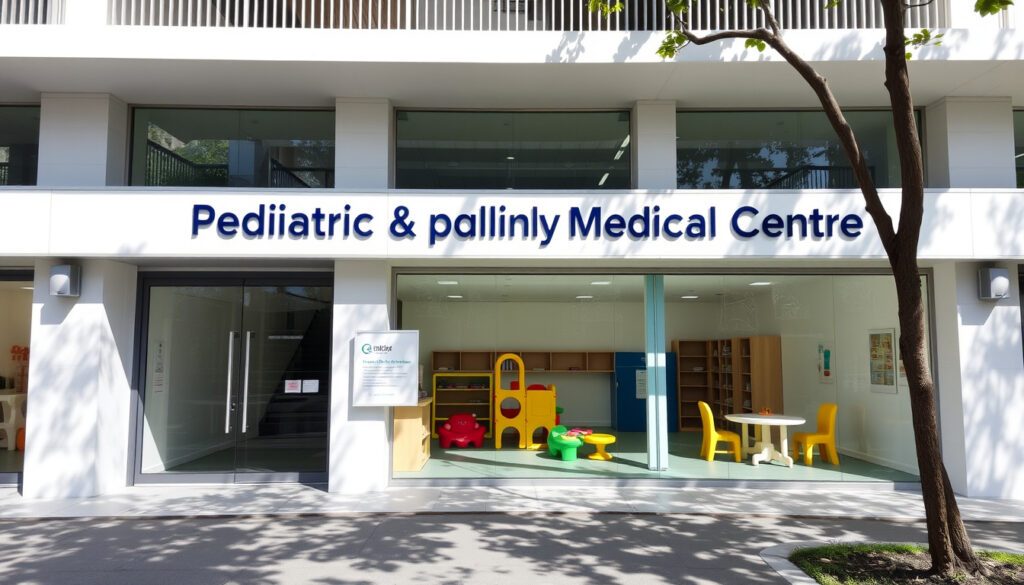
Paediatric & Family Medical Centre | Tampines Clinic Guide
Few things make a parent pause like a sick child. You want a doctor who knows kids, but also one who can handle the whole family when needed. That’s where a dual-focus clinic like Paediatric & Family Medical Centre Pte Ltd comes in — offering both paediatric and general medical care under one roof at 139 Tampines Street 11. Whether you’re navigating a first fever or a chronic condition, knowing what this clinic provides — and where its limits lie — helps you decide if it’s the right fit.
Location: 139 Tampines Street 11, #01-52, Singapore 521139 ·
Service Type: Paediatric & Family Medical Centre ·
Google Business Category: Clinic ·
Opening Hours (Example): 9:00 AM – 5:00 PM (Hours vary; verify directly)
Quick snapshot
- Address: 139 Tampines Street 11, #01-52 (Clinic Geek, a medical directory)
- Offers paediatric care, vaccinations, health screenings, and chronic disease management (Clinic Geek, a medical directory)
- Phone listed: 6783 8743 (Waze, a navigation app)
- Exact availability of sub-specialty services (e.g., formal ADHD assessments)
- Number of doctors currently practising at the clinic
- Whether online booking is available or only walk-in
- Weekday opening at 08:30 (from Waze, a navigation app)
- Saturday also opens at 08:30 (Waze, a navigation app)
- Not a 24-hour clinic — hours vary; confirm directly before visiting (Waze, a navigation app)
- Call 6783 8743 to verify current hours and appointment policy
- Check if teleconsultation is available for minor issues
- Compare with nearby specialty clinics if advanced paediatric care is needed
Five key details, one takeaway: this is a neighbourhood clinic with a broad service menu, but specific sub-specialty availability isn’t publicly documented.
| Detail | Value |
|---|---|
| Full Name | Paediatric & Family Medical Centre Pte Ltd |
| Address | 139 Tampines Street 11, #01-52, Singapore 521139 |
| Phone | 6783 8743 (per Waze, a navigation app) |
| Clinic Type | Private medical practice |
| Specialization | Paediatrics and Family Medicine |
| Services Listed | General consultations, health screenings, vaccinations, minor surgery, women’s health, chronic disease management (Clinic Geek, a medical directory) |
| Nearby Transport | Near Tampines MRT and bus interchange (reportedly convenient per Clinic Geek, a medical directory) |
Is a pediatrician the same as a GP?
What is a General Practitioner (GP)?
- A GP treats patients of all ages — infants, adults, and the elderly — for common illnesses and preventive care.
- In Singapore, GPs typically complete 5–6 years of medical school, 1 year of housemanship, and then enter general practice without further specialisation.
- They are often the first point of contact for undifferentiated symptoms.
What is a Paediatrician?
- A paediatrician is a medical specialist focused exclusively on children from birth through adolescence.
- Training involves an additional 5 years of residency after housemanship, according to the Singapore Medical Council (specialist accreditation body).
- The National University Hospital (Singapore’s leading public hospital) notes that its paediatric service provides comprehensive care for newborns, children, and adolescents — a level of depth GPs don’t usually cover.
The pattern: GPs cast a wide net; paediatricians go deep into childhood development and disease.
The catch: Referral from a GP is often required to see a paediatrician in Singapore, unless you book directly at a private practice like Paediatric & Family Medical Centre Pte Ltd, which offers both.
What is the difference between pediatrics and family medicine?
Scope of practice for family medicine
- Family medicine covers all age groups and includes women’s health, geriatrics, and chronic adult diseases such as diabetes and hypertension.
- Family physicians are trained to manage a broad spectrum of conditions across a patient’s lifetime.
Scope of practice for pediatrics
- Pediatrics concentrates on child development, vaccination schedules, childhood illnesses, and congenital conditions.
- The National University Hospital (Singapore’s leading public hospital) is the only public hospital in Singapore with paediatric kidney and liver transplant programmes, illustrating the subspecialty depth.
- Family medicine does not include subspecialties like paediatric oncology or cardiology.
Choosing a dual-focus clinic like Paediatric & Family Medical Centre Pte Ltd means you get convenience — one location for child and parent check-ups — but you lose the deep subspecialty access that a dedicated paediatric hospital offers.
Why this matters: For routine childhood illnesses and vaccinations, a family medicine clinic is perfectly adequate. For complex developmental concerns or rare conditions, a paediatrician with subspecialty training is essential.
How long does it take to become a pediatrician in Singapore?
Medical school to specialist timeline
The training path for paediatric specialists in Singapore demands over a decade of commitment.
| Stage | Duration |
|---|---|
| Undergraduate medical degree (MBBS or equivalent) | 5–6 years |
| Housemanship (internship) | 1 year |
| Paediatric residency (specialist training) | 5 years |
| Board certification (exit exam) | Variable (included in residency) |
| Total minimum time | 11–12 years |
This timeline is based on requirements from the Singapore Medical Council (specialist accreditation body) and the standard NUHS Paediatric Residency Programme.
Paediatric Residency Programme in Singapore
- The NUHS Paediatric Residency Programme is the primary training pathway for paediatric specialists in Singapore.
- It includes rotations in general paediatrics, neonatology, paediatric subspecialties, and research.
- After residency, doctors may pursue further fellowship training (e.g., paediatric cardiology, neurology).
The pattern: Becoming a paediatrician requires over a decade of training — far longer than a GP’s 7–8 years. That investment translates into expertise in child-specific conditions.
Why would you be referred to a paediatrician?
Common reasons for referral
- Complex medical issues such as congenital heart disease, cancer, or metabolic disorders.
- Developmental delays, autism spectrum disorder, or ADHD diagnosis.
- Severe allergies, asthma, epilepsy, or recurrent infections.
Chronic conditions and developmental concerns
- GPs may refer when a child’s condition falls outside their comfort zone — for example, a premature infant with chronic lung disease.
- The National University Hospital (Singapore’s leading public hospital) provides multidisciplinary teams for such cases, including paediatric surgeons and sub-specialists.
- A dual-focus clinic can manage many conditions but will refer out for advanced diagnostics or hospital-level care.
The implication: If your child has a straightforward ear infection or well-child check, the family clinic is fine. For anything that feels “off” developmentally or involves multiple specialists, a paediatrician referral is the safer route.
Can a pediatrician give an ADHD diagnosis?
ADHD diagnostic criteria (DSM-5)
- Yes, paediatricians are qualified to diagnose ADHD using DSM-5 criteria.
- The Centers for Disease Control and Prevention (US public health agency) emphasises a comprehensive evaluation involving parent and teacher behaviour rating scales, clinical interviews, and rule-out of other conditions.
- Diagnosis typically requires symptoms present before age 12, in multiple settings, for at least 6 months.
Role of paediatricians in ADHD assessment
- Many paediatricians in Singapore conduct ADHD assessments as part of general developmental surveillance.
- However, not all family clinics offer this service — it’s unclear whether Paediatric & Family Medical Centre Pte Ltd performs formal ADHD evaluations. According to the Centers for Disease Control and Prevention (US public health agency), a thorough assessment may require input from a child psychologist or psychiatrist.
- If you suspect ADHD, calling the clinic to ask about their evaluation process is a good first step.
A clinic that dismisses parental concerns about ADHD without a proper assessment is a red flag. The Centers for Disease Control and Prevention (US public health agency) recommends a multi-method evaluation — not a quick prescription.
Upsides
- One location for child and adult consultations — saves time for families
- Wide range of services: vaccinations, health screenings, minor surgery
- Conveniently located near Tampines MRT and bus interchange (Clinic Geek, a medical directory)
- Phone number publicly listed — easy to call for details
Downsides
- Limited public information on sub-specialty services (ADHD, allergy testing)
- Not a 24-hour clinic — after-hours emergencies need another provider
- No confirmed online booking system; may require walk-in or phone appointment
- Doctor qualifications and number of paediatricians on staff are not publicly documented
What are red flags for a doctor?
Signs of an unreliable physician
- Lack of visible credentials or refusal to explain diagnosis clearly.
- Dismissive attitude toward parents’ concerns — especially about developmental issues.
- Overprescribing medication (e.g., antibiotics for viral infections) without proper testing.
What to look for in a clinic
- Check if the clinic displays registration with the Singapore Medical Council (specialist accreditation body).
- Look for practice that follows evidence-based guidelines — e.g., the Centers for Disease Control and Prevention (US public health agency) for ADHD or HealthHub (HPB Singapore’s health portal) for vaccination schedules.
- Trust your gut: if a doctor brushes off your worry without listening, seek a second opinion.
The implication: A good clinic doesn’t hide information. If you can’t find basic details online (hours, services, credentials), call ahead and gauge their responsiveness.
What is the quickest doctor to become?
Fastest medical specialties
- General practice (GP) is the shortest — about 7–8 years after entering medical school.
- Emergency medicine can also be completed in around 8 years (including residency).
- Paediatrics requires 11–12 years minimum, as noted by the Singapore Medical Council (specialist accreditation body).
Why pediatrics is not the fastest
- The depth of training in child development, neonatology, and paediatric subspecialties demands longer residency.
- The National University Hospital (Singapore’s leading public hospital) provides a tertiary-level paediatric service that includes transplant programmes, reflecting the advanced skills acquired.
The catch: A GP can get you through minor illnesses quickly, but paediatricians bring a decade-plus of focused expertise that matters when your child has a complex issue.
Clarity check
What’s confirmed
- Clinic address: 139 Tampines Street 11, #01-52 (Clinic Geek, a medical directory)
- Provides both paediatric and general medical care (Clinic Geek, a medical directory)
- Opening hours: 08:30 start on weekdays and Saturday (Waze, a navigation app)
What remains unclear
- Exact range of subspecialty services (e.g., ADHD assessment, allergy testing)
- Number of doctors and their paediatric qualifications
- Whether online appointment booking is available or only walk-in
- Weekend closing times (not fully documented)
Quotes from the sources
“The centre provides general medical consultations, health screenings, vaccinations, minor surgical procedures, paediatric care, women’s health services, and chronic disease management.”
— Clinic Geek, a medical directory
“NUH paediatrics provides comprehensive and specialised medical and surgical services for newborns, children, and adolescents.”
— National University Hospital, Singapore’s leading public hospital
“Waze indicates weekday opening begins at 08:30 and Saturday opening also at 08:30.”
— Waze, a navigation app
“CDC guidelines emphasize a comprehensive evaluation for ADHD, including parent and teacher interviews and behaviour checklists.”
— Centers for Disease Control and Prevention, US public health agency
The stakes are clear: you need a clinic that matches your family’s health needs. For everyday care, Paediatric & Family Medical Centre Pte Ltd offers a practical one-stop option in Tampines. For developmental concerns or specialist referrals, you’ll want to dig deeper into their service list — or look to a dedicated paediatric centre like those run by Singapore Medical Group (a private healthcare provider).
familymc.com, familymedicalny.com, sbcc.sg, imc-healthcare.com, npcmc.com, kidsclinic.sg, kinderclinic.com.sg, rmfmc.com
Frequently asked questions
Does Paediatric & Family Medical Centre Pte Ltd accept walk-ins?
Based on available listings, walk-ins appear to be accepted, but it’s best to call 6783 8743 to confirm current policy.
What are the clinic’s opening hours on weekends?
Waze, a navigation app, shows Saturday opening at 08:30. No reliable source documents Sunday hours; the clinic likely operates limited weekend hours or is closed on Sunday. Call ahead.
Do I need a referral to book an appointment here?
As a private clinic, you can likely book directly without a referral. However, if you intend to claim insurance or see a specific paediatrician, check with the clinic first.
Can this clinic provide vaccinations for my baby?
Yes, vaccinations are listed among their services per Clinic Geek, a medical directory. The clinic should follow the HealthHub (HPB Singapore) national immunisation schedule.
Is the clinic accessible by public transport?
Clinic Geek, a medical directory, describes it as conveniently located near public transportation. Tampines MRT is a short walk or bus ride away.
Does the clinic offer teleconsultation services?
No teleconsultation option has been publicly listed. You can ask when you call.
More related posts
 Transtar Bus to JB: Schedule, Price & Booking
 Da Shi Jia Big Prawn Mee Review: Menu, Prices, Michelin
 John 3:16 Meaning: Context, Translation, and Impact
 Prismatic Evolution Surprise Box: Contents and Worth
 Inter Milan vs Bayern Munich Lineups: Confirmed XIs Apr 2025
 Situs Slot MITOSBET88: What You Need to Know Before Playing
 Housing and Development Board (HDB) Complete Guide
 Class 4 Driver Jobs Singapore: Salary & Requirements Guide
