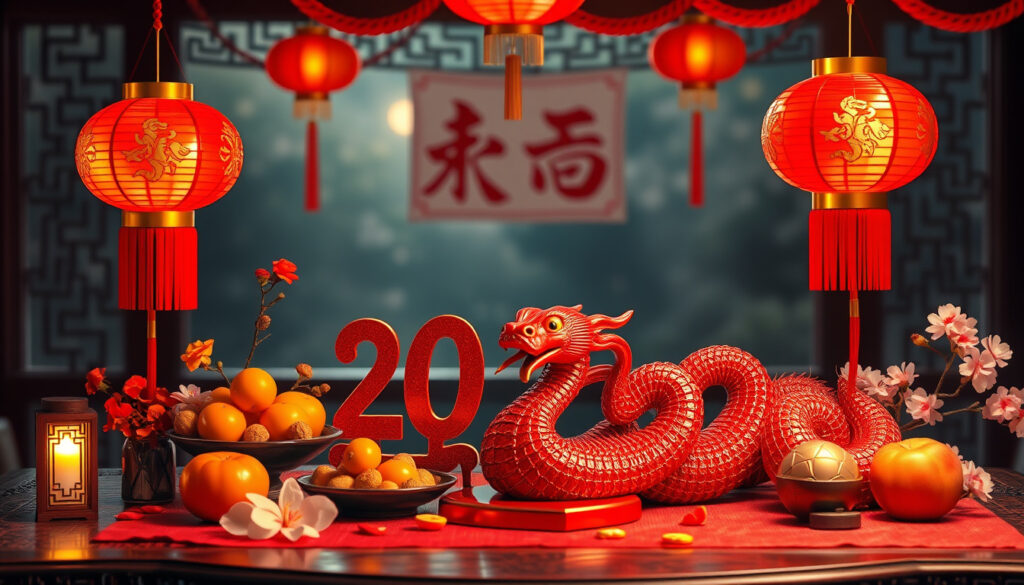
Happy Chinese New Year – 2025 Dates, Greetings and Traditions
Chinese New Year, also called the Lunar New Year or Spring Festival, stands as one of the most significant celebrations in East Asia and among Chinese communities worldwide. The festival marks the beginning of the lunar calendar year and carries deep cultural meaning centered on family reunions, renewal, and hopes for prosperity in the year ahead.
For 2025, the celebration ushers in the Year of the Wood Snake, beginning on January 29 and continuing for 15 days until the Lantern Festival. Understanding how to properly greet others during this period, along with the traditions and meanings behind the festivities, helps bridge cultural understanding whether you are celebrating or simply wish to acknowledge the occasion.
This guide covers the essential greetings, key dates, traditional customs, and the significance behind the celebrations that bring together millions of people across the globe each year.
How Do You Say Happy Chinese New Year in Chinese?
The most widely recognized greeting during the Spring Festival is Gōngxǐ fācái (恭喜发财), which translates to “Happiness and Prosperity” in Mandarin and “Gong hei fat choy” in Cantonese. This phrase carries wishes for wealth and good fortune, making it particularly popular in business contexts and among elders who appreciate traditional expressions. Research from the Encyclopedia Britannica documents how these traditional blessings have been exchanged for centuries across Chinese-speaking communities.
Several other greetings serve different social situations during the festival period. Xīnnián hǎo (新年好), meaning “New Year Goodness” or simply “Happy New Year,” remains the most casual option, widely used among family members and close friends. Its pronunciation in Mandarin is /sshin-nyen haoww/, while Cantonese speakers say “san nin hou.” The Britannica resource provides additional context on regional variations in pronunciation and usage.
These greetings follow a particular social convention: they are exchanged once upon first meeting someone during the New Year period, after which normal everyday greetings resume. This custom reflects the importance placed on fresh beginnings and the symbolic weight of those first encounters in the new year.
| Fact | Details |
|---|---|
| Official Name | Spring Festival (Chunjie) |
| Lunar Date | 1st day of 1st lunar month |
| 2025 Gregorian Date | January 29 |
| Zodiac Animal | Snake (Wood element) |
| Key Symbol | Red lanterns, dragon dances |
| Duration | 15 days ending with Lantern Festival |
| Primary Greeting (Mandarin) | Gōngxǐ fācái (恭喜发财) |
| Primary Greeting (Cantonese) | Gong hei fat choy |
| Meaning | Happiness and Prosperity |
When Is Chinese New Year 2025?
Chinese New Year 2025 falls on January 29, marking the start of festivities that will continue for 15 consecutive days. The celebration concludes on February 12, 2025, with the Lantern Festival, which traditionally features illuminated lanterns, riddles, and sweet glutinous rice balls known as tangyuan.
What Is the Chinese Zodiac for 2025?
The year 2025 corresponds to the Wood Snake in the Chinese zodiac system. Each zodiac animal cycles every 12 years, with additional complexity introduced through the five-element system (Wood, Fire, Earth, Metal, Water). The Wood Snake represents wisdom, elegance, and transformation, qualities traditionally associated with serpent symbolism across many cultures. According to the Encyclopedia Britannica’s coverage of the Chinese zodiac, the interaction between zodiac animals and the five elements creates a 60-year cycle that governs traditional interpretations of fortune and character.
This positioning follows the 2024 Year of the Wood Dragon and precedes the 2026 Year of the Fire Horse. Those born under the Snake sign are believed to possess qualities of intelligence, intuition, and charm, though the specific elemental association adds nuance to traditional zodiac interpretations.
Why Does Chinese New Year Fall on a Different Date Each Year?
Unlike the Gregorian calendar, which follows Earth’s solar orbit around the Sun, the Chinese lunar calendar tracks both the Sun and Moon. The Chinese New Year occurs on the first new moon after the winter solstice, placing it between January 21 and February 20 annually. The Britannica encyclopedia explains how lunar calendars differ from solar calendars in their fundamental approach to measuring time.
Astronomical alignment determines the exact date each year. The winter solstice marks a reference point, with the first new moon afterward signaling the new year. This explains why the festival date shifts annually and why the celebration sometimes begins in late January or other times in February.
What Are Chinese New Year Traditions?
Chinese New Year traditions encompass a rich tapestry of customs passed down through generations. These practices serve multiple purposes: honoring ancestors, strengthening family bonds, warding off misfortune, and inviting prosperity for the year ahead. While some traditions have evolved with modern life, their core symbolic meanings remain largely intact.
Family Reunion Dinners
The family reunion dinner on New Year’s Eve stands as the most important meal of the year for Chinese families. This gathering, known as tuanyuan, brings together multiple generations under one roof, sometimes requiring extensive travel for family members who live far from their hometowns. The dinner symbolizes unity and serves as a moment for families to give thanks for the past year while looking forward to the next.
Red Envelopes and the Color Red
Red envelopes, called hóngbāo, contain money given to children and unmarried adults by elders and married couples. This tradition represents the transfer of good luck and prosperity from older to younger generations. The red color itself holds deep significance, believed to ward off evil spirits and bring joy according to the mythology surrounding the Nian monster, a creature traditionally said to be scared by red, noise, and fire. The Encyclopedia Britannica documents how these customs have deep historical roots in Chinese agricultural society.
Amounts ending in lucky numbers—particularly 8 (prosperity) and 6 (smoothness)—are considered especially auspicious. In Chinese culture, giving an even number of banknotes is generally preferred, as odd numbers are associated with funeral offerings.
What Food Is Eaten During Chinese New Year?
Each dish served during the celebration carries symbolic meaning. Dumplings represent wealth due to their shape resembling ancient Chinese money. Fish symbolizes abundance and surplus, with the Chinese word for fish (yú) sounding like the word for surplus or abundance. Rice cakes, called niángāo, represent growth, improvement, and higher achievements as the word sounds like “year high” or “year growth.” The Britannica resource provides comprehensive coverage of traditional food symbolism during the festival.
What Colors Are Lucky for Chinese New Year?
Red dominates every aspect of the celebration—decorations, clothing, gifts, and envelopes all prominently feature this color. Gold also appears frequently as a symbol of wealth. Together, red and gold create the visual identity of the holiday, appearing in everything from door couplets to temple decorations to fashion choices during the festival period.
Fireworks and Their Evolution
Historically, fireworks and firecrackers served the purpose of scaring away evil spirits, particularly the mythical Nian beast. Today, however, many Chinese cities have implemented bans on fireworks for air quality and safety reasons. Urban areas increasingly substitute light shows and digital displays for traditional pyrotechnics, though rural communities and areas where bans are less enforced often maintain the custom.
Global Diaspora Celebrations
Chinese communities worldwide celebrate with parades, lion dances, temple fairs, and fireworks where local regulations permit. Major Chinatowns in cities like New York, London, and Sydney host significant events drawing both Chinese community members and curious visitors. These celebrations maintain traditional elements while adapting to local contexts, creating unique expressions of the holiday across different cultures. The Encyclopedia Britannica notes how diaspora celebrations have helped spread awareness of the festival globally.
What Does Happy Chinese New Year Mean?
At its core, wishing someone “Happy Chinese New Year” extends beyond simple holiday greeting. The phrase and its Chinese equivalents carry wishes for renewal, happiness, prosperity, and good fortune. The deeper meaning acknowledges the fresh start the new year represents and expresses hope that the recipient will experience benefit and joy throughout the coming cycle.
The Spring Festival name itself reflects the agricultural roots of Chinese civilization, symbolizing renewal and the anticipation of planting season that traditionally followed the winter lull. This association with growth and new beginnings infuses the celebration with optimism about future prospects.
Understanding the deeper meaning behind the greetings helps avoid common missteps. Simply memorizing pronunciation matters less than understanding the sentiment behind the words. Demonstrating genuine respect for the tradition and its significance matters more than perfect pronunciation.
The 15-Day Festival Timeline
The Spring Festival follows a structured sequence of observances, each day carrying its own significance and traditional activities. Understanding this progression provides insight into how thoroughly the celebration permeates daily life during this period.
- New Year’s Eve (除夕 – Chúxī) — Family reunion dinner brings relatives together for the most important meal of the year, followed by staying awake through midnight to welcome the new year.
- New Year’s Day (初一 – Chūyī) — First-day celebrations include visiting elders, exchanging New Year greetings, and avoiding negative activities like cleaning or arguing.
- Day 2 (初二 – Chū’èr) — Married daughters traditionally return to their birth families; businesses reopen partially in some regions.
- Days 3-7 — Visiting relatives and friends continues, with specific days sometimes reserved for in-law families in different regions.
- Lantern Festival (元宵节 – Yuánxiāojié) — The final day features lantern displays, riddles, and eating tangyuan (glutinous rice balls), marking the celebration’s conclusion.
Established Facts Versus Remaining Questions
While much about Chinese New Year is well-documented, certain aspects remain subject to variation or continued study. Below is a comparison of confirmed information against areas where details may differ by source or remain uncertain.
| Established Information | Uncertain or Variable Details |
|---|---|
| January 29, 2025 marks the lunar new year | Exact local customs vary by region within China |
| 2025 is the Year of the Wood Snake | Fireworks ban enforcement varies by city and changes yearly |
| Duration spans 15 days ending with Lantern Festival | Specific foods may vary by family traditions and regional cuisine |
| Red envelopes given to children and unmarried adults | Appropriate monetary amounts differ by economic region |
| Family reunion dinner on New Year’s Eve is the central tradition | Diaspora event specifics vary by location and organization |
| Gong Xi Fa Cai is the primary greeting for prosperity | Regional greeting preferences may vary |
The Cultural Significance of Spring Festival
The origins of Chinese New Year trace back thousands of years to the agricultural cycles that defined Chinese civilization. The mythology surrounding the Nian monster—that fearsome beast who emerged at year’s end to devour villagers—provides one of the most popular origin stories for the festival’s customs. According to legend, the villagers discovered that Nian feared the color red, loud noises, and fire, leading to the traditions of red decorations, fireworks, and celebration that define the holiday.
Beyond mythology, the festival serves as a mechanism for social cohesion in Chinese society. The mandatory family reunion requirement, while increasingly challenging for modern mobile populations, reinforces kinship ties that have defined Chinese culture for millennia. The Spring Festival also functions as a moment of collective renewal, where communities collectively express hope for better times while honoring the wisdom of ancestors.
UNESCO recognized the Spring Festival as part of China’s intangible cultural heritage, acknowledging its significance not only to Chinese communities but to humanity’s diverse cultural tapestry. This recognition has influenced preservation efforts and prompted discussions about how to maintain traditional elements amid rapid modernization and urbanization.
Sources and Expert Perspectives
Cultural understanding of Chinese New Year draws from multiple authoritative sources including linguistic guides, travel resources, and cultural institutions. Linguistic resources provide the precise pronunciations and contextual usage of greetings, while cultural guides document the evolution of traditions from their agricultural origins to contemporary global celebrations. The Encyclopedia Britannica serves as a comprehensive reference for understanding the historical and cultural dimensions of the festival.
The most common greetings convey happiness, prosperity, and good fortune, used primarily in Mandarin and Cantonese during the festival period. These are typically said once upon first meeting someone during the New Year, then normal greetings resume.
Regional variations in tradition highlight the complexity of a celebration that spans thousands of years and countless communities. While certain elements remain universal—red decorations, family gatherings, symbolic foods—the specific expressions of these themes evolve with local cultures and individual family practices.
Summary
Chinese New Year 2025 begins on January 29, welcoming the Year of the Wood Snake in a celebration that spans 15 days. The greeting “Gong Xi Fa Cai” (恭喜发财) wishes happiness and prosperity upon recipients, while traditions like family reunion dinners, red envelopes, and symbolic foods reinforce themes of unity, luck, and renewal. The festival connects participants to centuries of tradition while adapting to modern contexts, including fireworks bans in urban areas and global diaspora celebrations. Understanding these elements helps both participants and observers appreciate the depth and resilience of this important cultural observance.
For those planning to experience cultural celebrations in Singapore, the Light Show Gardens by the Bay offers seasonal displays that incorporate elements of traditional lantern festivals, while Tang Tea House Marina Square provides opportunities to experience Chinese culinary traditions beyond the holiday period.
Frequently Asked Questions
What is the Chinese zodiac for 2025?
2025 is the Year of the Wood Snake in the Chinese zodiac. The Snake is the sixth animal in the 12-year cycle, and the Wood element adds additional meaning related to growth and vitality. People born under this sign are traditionally considered wise, elegant, and intuitive.
Why is Chinese New Year on a different date each year?
Chinese New Year follows the lunar calendar rather than the solar Gregorian calendar. It falls on the first new moon after the winter solstice, which can occur anywhere between January 21 and February 20. This astronomical calculation explains the annual variation in dates.
What food is eaten during Chinese New Year?
Several foods carry symbolic meaning: dumplings represent wealth, fish symbolizes abundance, and rice cakes signify growth and prosperity. Family reunion dinners typically feature multiple symbolic dishes alongside regular favorites, with regional specialties varying across China’s diverse culinary landscape.
How long does Chinese New Year last?
The official celebration runs for 15 days, beginning on New Year’s Day and concluding with the Lantern Festival. However, preparation activities like cleaning and shopping typically begin weeks before, and some businesses remain closed for longer periods in practice.
What do red envelopes symbolize?
Red envelopes, called hóngbāo, contain money given to children and unmarried adults by elders. The red color wards off evil spirits while the money inside represents wishes for good fortune and prosperity. The tradition reinforces generational bonds and the passing of luck from older to younger family members.
How do you pronounce Gong Xi Fa Cai?
In Mandarin, the pronunciation is approximately /gung-shee fa-tsai/. In Cantonese, it sounds like “gong hei fat choy.” The phrase means “Happiness and Prosperity” and serves as the most popular greeting for wishing someone wealth and good fortune during the new year.
Are fireworks banned during Chinese New Year?
Many Chinese cities have implemented fireworks bans for air quality and safety reasons, though enforcement varies. Rural areas and locations without restrictions often continue the traditional practice of setting off firecrackers to scare away evil spirits, based on the legend of the Nian monster.
More related posts
 Coffee Bean Bedok Mall – Hours, Menu, Location and Reviews Guide
 Check Traffic Offence by Vehicle Number – Parivahan Portal Guide
 Singapore Gold Rate Today for 1 Gram: 22K & 24K Prices
 NTUC Packer Part Time Job: Salary, Duties, and How to Apply
 How to Test Smoke Alarm: Step-by-Step Guide and Troubleshooting
 Swee Guan Hokkien Mee: Best Charcoal-Fried in Geylang
 Samsung Z Fold7 Call Transcript: How to Enable Live Captions
