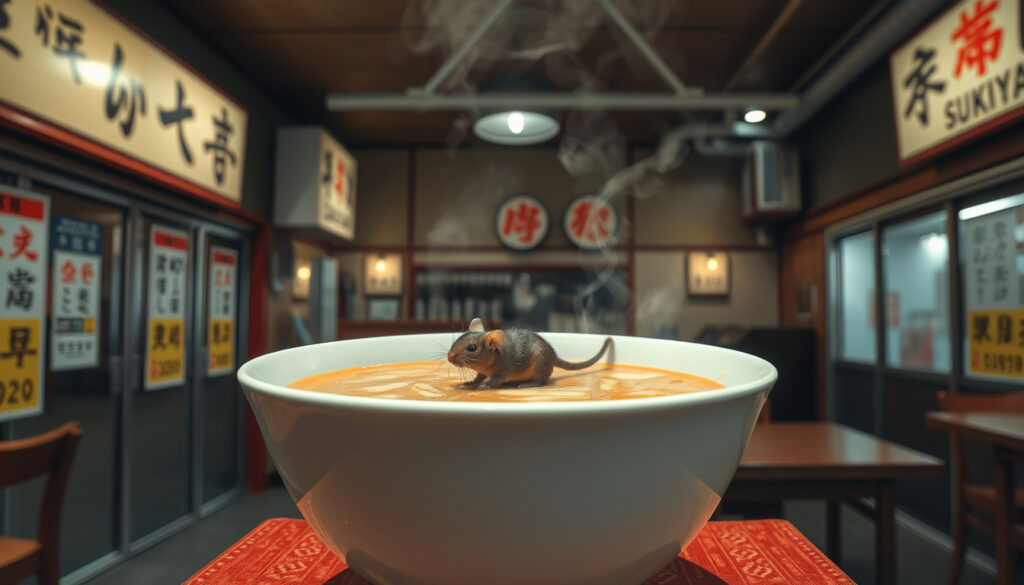
Rodent Found in Miso Soup: Sukiya Closes 2000 Stores
A rat discovered in miso soup at Sukiya’s Tottori Minamiyoshikata branch on January 21, 2025, triggered a food safety crisis that forced nearly 2,000 stores to close and knocked 7.1% off parent company Zensho Holdings’ stock price. The two-month delay before public disclosure compounded the damage, and a second pest incident at a Tokyo location added to investor concerns.
Stores temporarily closed: Nearly 2,000 ·
Stock drop: 7.1% ·
Incident date: January 21, 2025 ·
Location: Tottori Minamiyoshikata branch ·
Pests found: Rat and cockroach
Quick snapshot
- Rat discovered in soup before serving (Japan Today)
- Closures for hygiene checks across network (Straits Times)
- Stock price reaction documented (Japan Times)
- Exact entry path of rodent into soup
- Long-term operational changes implemented
- Whether customer health was affected
- January 21: Rat found at Tottori store
- March 22: Public announcement (2 months later)
- March 24: Stock falls 7.1%
- March 29: Cleaning begins at 2,000 stores
- Ongoing investigations by food safety authorities
- Reinforcement of hygiene protocols across chain
- Market monitoring as stores reopen
The table below summarizes the key facts documented across multiple news outlets.
| Key facts | Details |
|---|---|
| Date of incident | January 21, 2025 |
| Branch location | Tottori Minamiyoshikata |
| Pest type | Dead rat |
| Additional pest | Cockroach |
| Stores affected | Nearly 2,000 |
| Stock impact | 7.1% drop |
Is Sukiya to close most stores in Japan after finding rat and cockroach in food?
The discovery at Sukiya’s Tottori branch on January 21, 2025 sent shockwaves through Japan’s restaurant industry. According to Japan Today, the rodent made its way into the miso soup while employees were preparing ingredients for other dishes. An employee failed to check the dish before serving it to the customer, who noticed the rat immediately and notified staff. The Tottori store was closed for two days following the incident.
Announcement details
Rather than alerting the public immediately, Sukiya kept the incident under wraps for approximately two months. The chain publicly announced the incident on March 22, 2025, prompting an immediate response from investors and consumers alike. The Japan Times reported that Sukiya apologized for failing to disclose the incident sooner, acknowledging the breach of trust with its customer base.
Extent of closures
Sukiya operates around 2,000 branches across Japan, making it one of the country’s largest restaurant chains known for its beef rice bowls. Following the incident announcement, the chain announced it would close nearly all of its stores for thorough cleaning and hygiene inspections. According to reporting from The Straits Times, these closures began on March 29, representing an unprecedented move for the chain. The chain announced it would double down on hygiene measures in response to the incident, implementing stricter checks at all locations.
Reasons for shutdown
The scale of the response reflects both the severity of the contamination and growing public concern. Compounding the situation, a bug contamination incident reportedly occurred at a Sukiya Tokyo restaurant on March 28, 2025, just two months after the rat incident, according to CBS News. This second incident, though not confirmed through official channels, added urgency to the nationwide hygiene review.
Sukiya’s decision to close nearly its entire network — a chain operating roughly 2,000 locations — signals just how seriously the company views the reputational damage. The two-month disclosure gap likely made the eventual response more extreme than if news had broken immediately.
Is Miso Soup Vegan?
For those wondering whether this incident carries additional dietary implications, the answer depends on the specific preparation. Traditional miso soup is not always vegan, as it often includes a dashi broth base made from fish, particularly driedbonito flakes. However, vegan miso alternatives are widely available for those following plant-based diets.
Traditional ingredients
Miso paste itself is typically made from fermented soybeans, rice or barley, salt, and koji (a fermentation starter). This base is vegetarian-friendly. However, the liquid that carries the miso — the broth or dashi — is where animal products frequently appear.
Animal product risks
Dashi, the foundational broth in most miso soup recipes, is traditionally made with kombu (kelp) and either bonito flakes or other dried fish. Diners following vegan or vegetarian diets should verify with restaurant staff whether their miso soup uses plant-based dashi. Labels should be checked for dashi ingredients, as some manufacturers produce vegan versions using only kelp.
Vegan alternatives
Restaurants increasingly offer vegan miso soup using plant-based dashi made from kombu alone. Tofu and seaweed remain common vegetarian-friendly additions when the broth is properly prepared. Those with dietary restrictions should always confirm preparation methods with staff, as cross-contamination risks also exist in busy kitchen environments.
While the Sukiya incident was a physical contamination rather than an ingredient transparency issue, it underscores why consumers with dietary restrictions should always verify soup preparation — not just the listed ingredients.
What is miso made of?
Understanding what goes into miso helps contextualize why this ingredient appears in so many Japanese dishes. The paste itself has ancient origins, dating back centuries as a staple of Japanese cuisine.
Core components
At its heart, miso is a fermented paste made from soybeans, rice or barley (depending on the variety), salt, and koji mold. The proportions and fermentation duration determine the final product’s flavor profile, ranging from mild white miso to robust red miso.
Fermentation process
The ingredients are mixed, inoculated with koji, and left to ferment for anywhere from a few weeks to several years. Longer fermentation produces deeper, saltier flavors. The process is similar to how certain cheeses develop complexity over time.
Common additives
Beyond the base four ingredients, some miso varieties include additives like bonito flakes, seaweed, or other flavor enhancers. These additions are typically minimal but can affect the product’s suitability for vegetarian or vegan diets.
Does miso soup have animal products?
This question becomes critical for those with dietary restrictions or ethical preferences. The answer is nuanced and depends heavily on preparation methods.
Dashi broth source
Traditional Japanese dashi relies heavily on fish products. Bonito flakes (dried, fermented skipjack tuna) provide the umami backbone for most restaurant-style miso soup. Without specifying otherwise, customers should assume their soup contains fish-derived ingredients.
Miso paste variants
While the miso paste itself is usually vegetarian, the ready-made soup mixes sold in stores sometimes include added seasonings that contain animal products. Reading ingredient labels carefully before purchase is advisable.
Vegan verification
To confirm a miso soup is vegan, diners must verify both the miso paste ingredients and the broth preparation. Asking specifically whether “katsuobushi” (bonito) or other fish products were used is the most direct approach.
Does Tokyo, Japan have a rat problem?
Urban pest issues are not unique to any single city, and Tokyo’s dense population and extensive food service industry create conditions where rodent sightings can occur. Understanding the broader context helps frame the Sukiya incident within larger food safety challenges.
Urban pest trends
Major metropolitan areas worldwide face ongoing pest management challenges, and Tokyo is no exception. The city’s extensive underground shopping districts, food streets, and dense restaurant concentration create favorable environments for urban pests.
Link to food incidents
Individual incidents like the Sukiya discovery can reflect broader systemic hygiene challenges rather than isolated failures. Restaurants serving high volumes of customers face inherent pest pressures that require constant vigilance.
Control efforts
Japanese food safety regulations mandate specific pest control protocols for commercial food establishments. Regular inspections and mandatory pest management contracts are standard requirements for operating restaurants in Japan.
Upsides
- Customer noticed rodent before consumption
- Company took responsibility publicly
- Nationwide hygiene review underway
- Increased transparency expectations set
Downsides
- Two-month disclosure delay damaged trust
- Second pest incident occurred shortly after
- Significant stock value lost
- Consumer confidence remains shaken
Timeline of the Sukiya Miso Soup Incident
The sequence of events reveals how a localized incident escalated into a nationwide corporate crisis.
| Date | Event | Source |
|---|---|---|
| January 21, 2025 | Rat found in miso soup at Tottori Minamiyoshikata branch | Japan Today |
| March 22, 2025 | Sukiya publicly announces rat discovery | Straits Times |
| March 24, 2025 | Shares of Zensho Holdings fall 7.1% | Japan Times |
| March 28, 2025 | Bug contamination reported at Tokyo restaurant | CBS News |
| March 29, 2025 | Nearly 2,000 stores close for cleaning | Straits Times |
The pattern that stands out is the delay between discovery and disclosure. That two-month gap meant investors and the public learned about the contamination alongside news of a second pest incident, creating a compounding effect that intensified market reaction beyond what the initial discovery alone might have triggered.
What customers and investors should watch
The immediate aftermath has settled, but questions remain about longer-term changes. Customers should monitor whether Sukiya implements visible hygiene improvements during store reopenings. Investors will want to track whether the company’s hygiene investments translate into restored stock value or whether additional incidents emerge.
The chain’s next moves — particularly how transparently it communicates future incidents and what concrete operational changes it implements — will likely determine whether this crisis becomes a turning point or a prolonged reputation damage case. Watch for Sukiya’s next quarterly earnings report: if hygiene investment costs spike alongside reopening, investors will get a clearer picture of just how deeply this incident affects the company’s financials beyond the initial stock drop.
Related reading: Sheng Siong staff lunch viral photo · Sheng Siong stock price impact
Frequently asked questions
What did Sukiya do after the rat was found?
The Tottori store where the rat was discovered closed for two days following the incident. Sukiya later announced it would close nearly 2,000 stores nationwide for hygiene cleaning, implementing stricter protocols across its entire network.
How many Sukiya stores were closed?
Sukiya operates approximately 2,000 branches across Japan, and nearly all of them closed for cleaning following the incident announcement, representing an unprecedented nationwide shutdown for the chain.
Was the rat in the miso soup eaten by a customer?
No. According to reports, the customer noticed the rat immediately upon receiving the dish and notified staff before consuming anything, preventing any potential health impacts from ingestion.
What caused the stock price drop for Sukiya’s parent company?
Shares of Zensho Holdings, Sukiya’s parent company, fell 7.1% following the public announcement on March 22. The market reacted to both the contamination incident itself and the two-month delay in disclosure, which raised concerns about corporate transparency and risk management.
Are there other pest incidents at Sukiya?
A bug contamination incident was reported at a Sukiya Tokyo restaurant on March 28, 2025, approximately two months after the rat discovery. This second incident compounded public concern and may have contributed to the severity of the nationwide response.
What is the current status of Sukiya stores?
Stores began reopening on March 29 following thorough cleaning and hygiene inspections. The chain has committed to implementing enhanced food safety protocols as locations resume normal operations.
How common are rat problems in Japanese restaurants?
Urban pest issues occur in major metropolitan areas worldwide, and Japan’s dense food service industry faces ongoing pest management challenges. Japanese food safety regulations mandate specific pest control protocols for commercial establishments, but individual incidents can still occur.
More related posts
 How Much Are 10,000 KrisFlyer Miles Worth? Cash, Flights & More
 How to Save Money: 5 Simple Rules and Strategies
 Century Square Food Court: Hours, Floor, Menu, Halal Options
 iOS 26 release date: launch, compatible iPhones, and features
 Fraser Residence Nankai Osaka: Location, Amenities & Reviews
 Terastal Festival Booster Box: Prices, Cards & Guide
 Pet Store Near Me – Northern NJ Locations Open Now
 The Pitt Season 2: Release Date, Cast, and How to Watch
