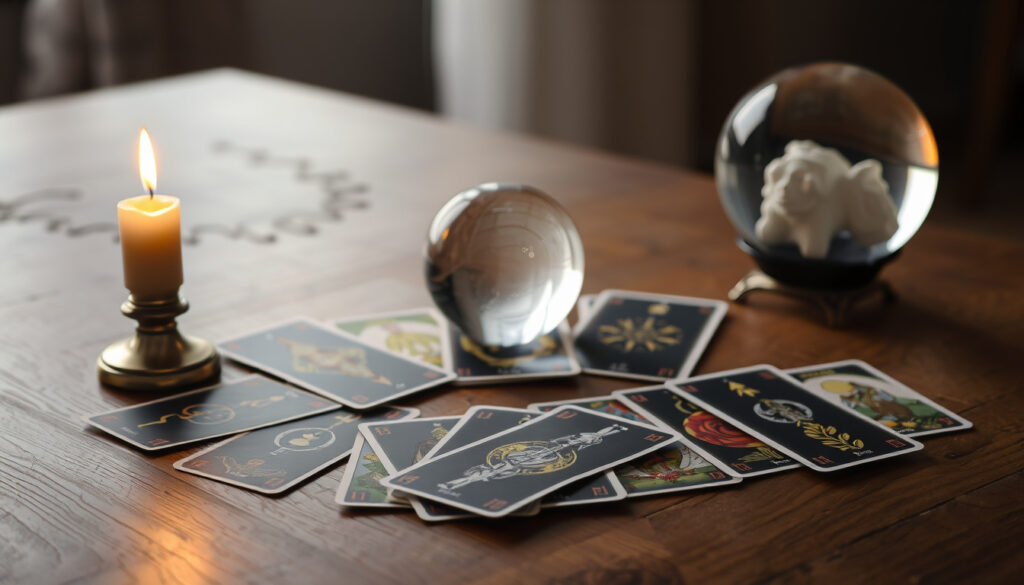
Tarot Card Reading Singapore: What to Know Before You Go
Searching for a tarot reading in Singapore feels like walking into a room where everyone already knows the rules. The search results pull in service pages, a news feature from 2017, a spiritual blog from 2025, and a Facebook post — but nothing neutral tells you what a reading costs or how to prepare, and the published rates and local details below turn that fog into a simple decision, with one caveat worth remembering: a tarot card is a mirror, not a verdict.
Paid 1-on-1 session price signal: from S$38 ·
Marketplace listing range: S$30–S$1,450+ ·
Booking channels: phone, SMS, WhatsApp, Facebook, Instagram, video call ·
Local areas in related searches: Bugis, Chinatown, Haji Lane ·
SERP time signals: 2017 news feature; 2025 spiritual guide
Quick snapshot
- Singapore Tarot Reading offers readings through Zoom or WhatsApp video, plus in-person sessions (Singapore Tarot Reading (published rate page)).
- Affinity Crystals lists one-on-one readings at S$35 per question or S$95 per hour (Affinity Crystals (Chinatown studio)).
- No specific Singapore card shop is named in the search results for buying tarot decks.
- The quality and independence of “Tarot Mamta review” results are not verifiable from the SERP.
- Mothership’s 2017 feature describes booking a 20-year-old tarot reader through an app.
- A 13 August 2025 guide from Madhu Tiwari frames tarot as self-reflection and decision-making.
- Confirm the rate and format before booking; event quotes are commonly per event, not per person (Gig Heaven (Singapore events marketplace)).
- Ask about session length, language, and confidentiality before you pay. (Gig Heaven (Singapore events marketplace))
One pattern cuts across every listing: you pay for time, format, and location — not for certainty.
| Fact | Detail |
|---|---|
| Target search phrase | tarot card reading singapore |
| Known community meetup spot | Suns Living Room cafe (Facebook community answer) |
| Practitioner claim | The Tarot Lady says Usha has served thousands of clients |
| Booking channels | Phone, SMS, WhatsApp, Facebook, Instagram, video call (Tarot in Singapore service site) |
| Paid session price signal | From S$38 |
| Local areas in related searches | Bugis, Chinatown, Haji Lane |
| Quickest listed session | 5 minutes at S$18 (Witchy Fox Tarot) |
| Per-question rate | S$35 per question (Affinity Crystals) |
| 30-minute / 60-minute sessions | S$80 / S$150 (Singapore Tarot Reading) |
| Email reading | S$80 for five questions (Singapore Tarot Reading) |
| Marketplace average booking | S$190 on Gig Heaven (Gig Heaven) |
| Two-hour event reading | S$386 (Witchy Fox Tarot (Singapore tarot reader)) |
Where can I find a tarot reading service in Singapore?
Singapore has no neutral directory of tarot readers, and the search results make that obvious: two service sites, one news feature, one spiritual blog, and a Facebook answer carry the entire conversation. The practical side is simpler than it looks — readers publish their rates, formats, and booking channels openly, and that is the information you should book on.
Where can I get a tarot reading online in Singapore?
- Singapore Tarot Reading offers readings through Zoom or WhatsApp video, plus in-person sessions at its published rate page.
- Witchy Fox Tarot describes most of its sessions as virtual on its Gig Heaven listing.
- Sun Goddess Tarot prices a one-hour live video-call reading at S$200 and asks video bookings to be made at least two weeks ahead (Sun Goddess Tarot (video-reading service)).
The two-week lead time is easy to miss. Online readings are not instant by default, so if you are planning around a date — a birthday, a decision deadline, a breakup — check the reader’s availability before you pay, not after.
What should I expect from a tarot reading service in Singapore?
- Session lengths run from a five-minute S$18 reading up to a one-hour S$168 session at Witchy Fox Tarot (Singapore tarot reader).
- Singapore Tarot Reading lists a 30-minute session at S$80 and a one-hour session at S$150, with email readings at S$80 for five questions.
- Affinity Crystals charges S$35 per question or S$95 per hour.
The format changes the question you can ask. A five-minute reading suits a single check-in, while an hour gives the reader room to explore patterns across work, relationships, and timing. Email readings sit in between — you write your question, the reader answers asynchronously, and you keep the response for later.
Where can I find tarot readings in Bugis, Chinatown, and Haji Lane?
- Affinity Crystals conducts its listed in-person readings by appointment at 150 South Bridge Road, Chinatown (Affinity Crystals (Chinatown studio)).
- Affinity Crystals says the studio is about three minutes from Chinatown MRT.
- Bugis, Chinatown, and Haji Lane appear as related searches for “tarot card reading singapore” — demand signals, not verified locations.
Treat neighborhood names as clues, not endorsements. A related search tells you people near Bugis or Haji Lane are asking for readings; it does not tell you which shop is reputable. The one physical address confirmed in the research — Affinity Crystals’ Chinatown studio — also publishes its rates openly, which is a stronger signal than a neighborhood mention.
How do I find the best psychic in Singapore?
- “Best psychic in Singapore” is a related search, not a verified ranking — no review aggregator or consumer body appears in the SERP.
- The most specific practitioner claim in the results: The Tarot Lady says Usha is a certified professional Tarot Reader and Psychic with thousands of clients served.
Neither claim can be independently verified from the search data. No government agency, academic study, or consumer body in the provided sources ranks psychic readers, so the closest thing to evidence is a reader’s own transparency — published rates, named formats, and direct booking channels.
What do Tarot Mamta reviews say?
- “Tarot Mamta review” appears as a related search, but the quality and independence of those review results are not verifiable from the SERP.
- No review count, star rating, or confirmed customer testimony appears in the provided search data.
This is a familiar pattern in the niche: a practitioner name draws search interest, and review-style content follows. Until a third party confirms the claims, treat “Tarot Mamta review” content as promotional material rather than evidence.
What this means: in a market where no neutral directory or verified ranking appears in search, the strongest signals are the ones a reader publishes themselves — clear rates, named formats, and real booking channels.
What this means: in a market with no neutral directory, published rates are the most reliable signal of a professional reader.
Where can I buy tarot cards in Singapore?
The honest answer from the search data: no specific Singapore card shop is named in the results. What the SERP does provide is the framework — what a standard deck looks like and how to treat one once it is yours.
What to know before buying tarot cards?
- Standard Tarot decks contain 78 cards.
- Decide between Tarot and oracle decks before buying; Tarot follows the 78-card structure, oracle decks do not.
A 78-card deck gives you a shared language with readers. That matters whether you are learning for yourself or checking what a reader’s spread means afterward.
What is the first thing you should do with a new tarot deck?
- Go through the deck card by card to check the condition and learn the imagery.
- Handle cards with clean hands and store them flat in their box.
Think of it as onboarding, not mysticism. A quick first pass helps you spot printing flaws and gives you a mental map of the deck’s art — the practical version of what many guides describe as making the deck yours.
What not to do with a tarot deck?
- Do not bend cards while shuffling; a damaged deck is harder to read.
- Do not let cards sit loose in a bag or pocket where edges get knocked.
None of this is supernatural. Tarot cards are printed paper, and the first rule of deck care is the same as for any paper you want to keep: dry, flat, gentle.
The catch: this is one area where the search results simply have no answer. Because no Singapore card shop is named in the SERP, the 78-card check is your main protection — a deck that is not 78 cards may still be lovely, but it is not standard tarot.
The implication: buying a deck is the start of your own practice, not a shortcut to reading.
Where can I get free AI tarot readings online?
AI tarot is a separate category from human reader services. No specific free AI tarot site is named in the provided search data, so this section is a filter, not a recommendation list.
How do free AI tarot readings work?
- AI tarot apps and sites generate card draws and interpretations using language models, not human readers.
- Outputs are generated text based on prompts and probabilities — not predictions calibrated to your situation.
Use a free AI reading the way you would use a writing prompt: it can surface ideas and questions, but it has no access to your context. The deck it draws is random, and the interpretation is statistical prose.
What should I check before using a free AI tarot reading?
- Check what happens to the questions you type — free tools may log or reuse your data.
- Check whether the reading is clearly labeled as AI-generated or entertainment; that label tells you the provider is not selling it as fortune-telling.
There is no established consensus in the provided sources on AI tarot accuracy, so apply the same rule you would to a free newsletter: the price is your attention, and the output is only as good as the thinking it triggers.
Free AI tarot is not a cheaper version of a human reading; it is a different tool. Use it to sharpen the question you will eventually pay to ask.
The catch: free AI tools are useful for drafting questions, but they do not replace the context a human reader provides.
Are tarot reading cards real?
The question is really two questions. Are the cards real objects? Yes. Do the cards predict the future? No source in the research says so.
What does real mean for tarot cards?
- Tarot cards are physical, standardized decks — most commonly 78 cards — that readers use as a tool.
- A 2025 Singapore spiritual guide describes tarot reading as a tool for self-reflection and decision-making, not as a scientific method.
The distinction shapes expectations. A deck can be real, a reading can be useful, and a prediction can still be wrong. The card does not carry information about your future; it carries imagery that you and the reader interpret together.
Is tarot reading a form of fortune-telling?
- Fortune-telling implies a fixed future; the 2025 guide’s framing points to reflection and choices instead.
- The research notes provide no evidence of supernatural causation for any reading.
The honest position: tarot can be used as a fortune-telling ritual, but nothing in the search data supports the mechanism. What is documented is the reflective use — people using cards to structure decisions, name emotions, and see patterns.
Why do people use tarot for self-reflection?
- The cards force concreteness: a question becomes a spread, and a spread becomes a story.
- The structure creates distance — your situation is laid out on the table, where it is easier to examine than the swirl in your head.
That is why the 2025 guide’s “self-reflection and decision-making” framing matters. A tarot reading is a decision-making ritual: it slows you down, gives you symbols to react to, and makes you state your situation out loud. None of that requires the cards to be magic.
What are the different types of tarot decks?
Deck types matter more than most first-timers expect, because the imagery changes how you read. Two families dominate the history, and one popular type of deck is not tarot at all.
What is a standard 78-card Tarot deck?
- Tarot decks typically have 78 cards, split between Major and Minor Arcana.
- Oracle decks do not follow the 78-card standard, which is why they read differently.
When a listing or guide says “tarot,” the 78-card structure is the baseline. Oracle decks can have any number of cards, which makes them more flexible and less standardized — a good second deck, a confusing first one.
What are Rider-Waite-Smith, Marseille, and Thoth decks?
- Rider-Waite-Smith and Marseille are common historical Tarot deck families.
- Thoth is a third named Tarot family, with its own artistic vocabulary.
For beginners, Rider-Waite-Smith is the most common starting point because its imagery is widely taught; Marseille has a plainer, numbered style; Thoth appeals to people drawn to denser symbolism.
What are oracle decks and how do they differ from Tarot?
- Oracle decks do not follow the 78-card structure and often have flexible card counts and themes.
- Choose a Tarot deck for a shared system; choose an oracle deck for freedom of imagery.
What is the luckiest card in tarot?
- No source in the research assigns an official “luckiest” card; the label is interpretive.
- The Sun and The Star are the cards most often cited as fortunate in tarot commentary — convention, not fact.
What is the prettiest tarot card?
- “Prettiest” is subjective by definition; it depends on the deck’s art style, not on a hierarchy.
- Browse deck images before buying — the card you find beautiful is the one you will remember and read more easily.
What is the most feared tarot card?
- Death is the card most often named as frightening in tarot commentary, yet readers commonly interpret it as transformation rather than physical death.
- The Tower and the Devil carry similarly scary reputations based on their imagery, not their common interpretations.
The pattern: the deck you choose sets the vocabulary of your reading. A Rider-Waite-Smith deck and a Marseille deck can answer the same question in different visual languages; neither is right or wrong, but only one will feel legible to you.
The pattern: deck choice determines the visual vocabulary of every reading you do.
What not to ask tarot cards?
Question etiquette is where tarot gets practical. The right question turns a reading into a useful conversation; the wrong one turns it into a slot machine.
When not to read tarot cards?
- Avoid readings during strong emotional distress or fatigue — both make interpretation less reliable.
- Do not read when you already have a decision and are shopping for permission; the cards will simply mirror your bias.
The core principle: a tarot reading is thinking support, not a crisis line. If you are exhausted, angry, or panicked, the symbolism bends to your state and you walk away with a self-fulfilling reading instead of a useful one.
How should I frame questions for a tarot reading?
- Ask open-ended questions that start with “what” or “how”: “What should I consider about this job offer?” works better than “Should I take the job?”
- Keep the question about your own choices, not other people’s hidden intentions.
Can I ask about health, money, or love?
- Health: ask for reflection on balance and stress, not for a diagnosis — that is a doctor’s job.
- Money: frame as decisions about work and spending, not guaranteed outcomes.
- Love: frame as patterns and communication, not “will this person come back?”
The general rule is simple: do not ask for guaranteed medical, legal, or financial predictions. A reader who promises certainty in those areas is selling comfort, not insight. A reader who redirects you to your own judgment is doing the job.
If a reader promises a guaranteed outcome about health, money, or a specific person’s feelings, you are no longer in a reflection session — you are in a sales funnel.
How do tarot reading rates compare in Singapore?
All four rate sheets are the providers’ own published prices — the same sources cited throughout this guide — and the spread is wide enough to change what you ask.
| Provider | Quick session | Long session | Email reading | Format notes |
|---|---|---|---|---|
| Singapore Tarot Reading | 30 min — S$80 | 60 min — S$150 | S$80 for five questions | Zoom, WhatsApp video, or in person |
| Affinity Crystals | S$35 per question | S$95 per hour | Not listed | By appointment at 150 South Bridge Road, Chinatown |
| Witchy Fox Tarot | 5 min — S$18; 15 min — S$38; 30 min — S$68 | 45 min — S$118; 60 min — S$168 | S$68 | Mostly virtual; two-hour event at S$386 |
| Sun Goddess Tarot | Not listed | 60 min video — S$200 | US$208 | Video readings booked at least two weeks ahead |
The practical takeaway: a per-question rate like S$35 works well when you have one sharp question, while a one-hour session between S$150 and S$200 gives the reader room to work through patterns. Gig Heaven’s marketplace reports an average booking value of S$190, which suggests many Singapore clients are already choosing the longer format.
A reader who publishes a rate card has already done the hardest part of the sales pitch — showing what the product costs. In a market with no neutral review system in the search results, that transparency is the closest thing to a seal of approval.
What this means: the price range reflects format differences, not quality differences.
How to prepare for your first tarot reading in Singapore
- Choose your format. In-person, video call, or email — each changes what you can ask and what you pay.
- Book through the published channel. Phone, SMS, WhatsApp, Facebook, Instagram, or video call are the channels Singapore readers actually advertise.
- Confirm the rate structure. Per question (S$35 at Affinity Crystals), per session (S$80 for 30 minutes at Singapore Tarot Reading), or per event (S$386 for two hours at Witchy Fox Tarot).
- Check lead time. Sun Goddess Tarot asks video readings to be booked at least two weeks in advance; do not assume same-week availability.
- Prepare one open question. “What should I consider about…” beats “Will I get the job?” every time.
- For events, confirm per-head math. Gig Heaven warns that event quotes are commonly per event rather than per individual reading, so one question settles it: “Is this price for everyone, or per person?”
The list is administrative, but it is protective. The two most common disappointments in this market — a surprise price structure and an unavailable reader — are both preventable with one booking message that asks for the rate, the format, the lead time, and the per-head math at once.
The pattern: paid time is the only thing a tarot reader actually sells, so the smartest preparation is pricing diligence, not spiritual preparation.
A short timeline of tarot in Singapore
The search data contains two dated milestones and one snapshot of the present — enough to show a market that moved from novelty to mainstream self-care.
- — Mothership publishes a first-person feature about booking a 20-year-old tarot reader through an app.
- — A spiritual guide attributed to Madhu Tiwari describes tarot reading in Singapore as a tool for self-reflection and decision-making.
- Present day — Google’s results for “tarot card reading singapore” mix two service sites, one news feature, one spiritual blog, and one Facebook page.
The shift matters. In 2017 the story was novelty — a young reader found through an app, framed as a curiosity. By 2025 the framing had normalized into self-reflection. The sources themselves tell that story: tarot went from “can you believe this works?” to “here is a tool for thinking.”
The pattern: in under a decade, the public framing shifted from novelty to normalcy — which is why today’s search results read like a utility market, not a sideshow.
What’s confirmed and what’s still unclear
Research confidence for this topic is low, so the honest move is to separate what is documented from what is not. The gap between the two lists is the real finding.
- Singapore Tarot Reading lists a 30-minute session at S$80 and a one-hour session at S$150 (Singapore Tarot Reading (published rate page)).
- Affinity Crystals lists one-on-one readings at S$35 per question or S$95 per hour at 150 South Bridge Road, Chinatown (Affinity Crystals (Chinatown studio)).
- Witchy Fox Tarot lists sessions from S$18 for five minutes to S$168 for an hour, with email readings at S$68 (Witchy Fox Tarot (Singapore tarot reader)).
- Sun Goddess Tarot lists a one-hour video-call reading at S$200 and asks for two weeks’ notice (Sun Goddess Tarot (video-reading service)).
- No specific Singapore card shop is named in the search results for buying tarot decks.
- The exact app used in Mothership’s 2017 feature is not named in the snippet.
- The quality and independence of “Tarot Mamta review” results is unclear.
- AI tarot reading accuracy has no established consensus in the provided sources.
- Gig Heaven’s S$30–S$1,450 listing range and S$190 average come from self-reported marketplace data, not a regulated price survey (Gig Heaven (Singapore events marketplace)).
The gap tells you what this market is: transparent about prices, opaque about outcomes. Providers publish rates because they have to compete; nobody publishes success rates because there is no standard way to measure them, and no source in the search data claims one.
What tarot readers and clients say
Readings are available through Zoom or WhatsApp video call, as well as in person.
Singapore Tarot Reading (rate page)
Usha is a certified professional Tarot Reader and Psychic with thousands of clients served.
The Tarot Lady (practitioner website)
Free community meetups are held at Suns Living Room cafe, alongside paid 1-on-1 sessions from S$38.
Facebook community answer
Tarot reading in Singapore is best understood as a tool for self-reflection and decision-making.
Madhu Tiwari (spiritual guide, 2025)
The through-line: every quote here describes formats, credentials, or reflection — nobody offers a measurable success rate. That consistency tells you what the service actually is.
The takeaway
Every price in this guide comes from a practitioner’s published list or a marketplace listing — there is no regulated tarot rate card in Singapore, and that is the point. The market is transparent about time and format and silent on guaranteed outcomes, which tells you exactly what a reading is for. For a first-time seeker in Singapore, the choice is clear: book a session with a published rate and one sharp question, or save the money and reflect on your own — because the value of a tarot reading is the thinking it starts, not the future it claims to see.
Related reading: Slot Gacor Verification Guide · Situs Slot MITOSBET88 Guide
Frequently asked questions
How much does a tarot card reading cost in Singapore?
Published rates range from S$18 for a five-minute session at Witchy Fox Tarot to S$200 for a one-hour video call at Sun Goddess Tarot. Thirty-minute sessions are listed at S$68 at Witchy Fox Tarot and S$80 at Singapore Tarot Reading; email readings run from S$68 to S$80 for five questions.
Do tarot readers in Singapore offer video call sessions?
Yes. Singapore Tarot Reading offers Zoom or WhatsApp video readings, Witchy Fox Tarot describes most sessions as virtual, and Sun Goddess Tarot lists a one-hour live video call at S$200.
Can I get a tarot reading in English in Singapore?
The service pages and listings visible in the search results are written in English, and booking channels such as WhatsApp and Facebook suggest English-language communication. Confirm the language when you book.
What should I bring to a tarot card reading in Singapore?
Bring one open question and, for in-person sessions, the confirmed address — Affinity Crystals, for example, reads by appointment at 150 South Bridge Road, Chinatown. For video sessions, check your connection and quiet space beforehand.
Are tarot readings in Singapore confidential?
Nothing in the provided sources states a formal confidentiality policy. Ask the reader directly about privacy before sharing sensitive details.
What happens during a typical tarot reading in Singapore?
You choose a format — in person, video, or email — and the reader lays out cards around your question, interpreting the symbols and patterns aloud. Sessions range from five-minute intuitive check-ins to one-hour consultations, and email readings are answered asynchronously.
The best question is usually the one that made you search in the first place — if this list did not cover it, bring it to the session.
More related posts
 Sydney Weather in June: Temperature, Rain & Travel Tips
 Capita Spring Sky Garden: Free Admission & Booking Guide
 AC Milan vs SSC Napoli Lineups: Starting XI & Analysis
 Free Family Things to Do in Melbourne: Verified Guide
 400°F to Celsius Conversion: Oven, Fan, Air Fryer Guide
 Christmas Log Cake Singapore 2025: Prices & Top Bakeries
 Sheng Siong Staff Lunch Photo – Viral Story and Key Facts
