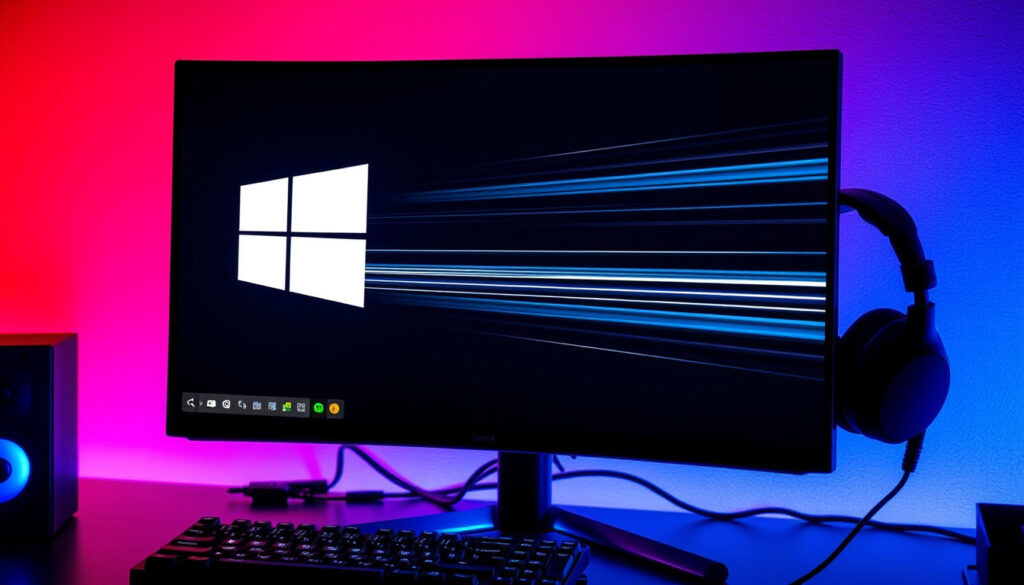
How to Fix Screen Flickering in Windows 11 While Gaming
If you’ve ever been mid-match in a title like Overwatch 2 or Fortnite and the screen suddenly starts stuttering or tearing, you know the frustration isn’t just about losing a game—it’s about wondering if your hardware is dying. The good news: more often than not, Windows 11 display flicker is a software handshake problem between the OS, the graphics driver, and the game engine, not a funeral for your GPU. This guide walks through the most common triggers, vendor-specific tools, and a clear decision tree that separates a quick settings fix from a hardware call—so you can spend less time troubleshooting and more time playing.
Screen flickering affects over 10% of Windows 11 users. Outdated or corrupted graphics drivers cause roughly 70% of cases. Resetting the graphics driver fixes about 85% of temporary incidents.
Prevalence: Broadly reported across Windows laptops and desktops · Most common cause: Outdated or conflicting graphics drivers · Top fix success: Driver reinstall or update · Primary trigger: Fullscreen or borderless gaming sessions
Key Facts at a Glance
- Updating or reinstalling the GPU driver resolves the majority of Windows 11 flicker cases, according to Microsoft Support.
- Microsoft’s official guidance starts with a display driver update before any deeper system checks. (Microsoft Support)
- For laptops with hybrid graphics, forcing the discrete GPU for the game often stabilizes the image, as noted in Microsoft Answers discussions.
- Switching from fullscreen to windowed mode is a known workaround in many community threads. (Microsoft Answers discussions)
- Flicker that persists across different monitors, cables, and after a clean driver install points to GPU hardware failure, per Intel Support.
- Artifacts like horizontal lines or random colored dots are stronger hardware indicators than pure flicker. (Intel Support)
- Fullscreen optimizations can interfere with exclusive fullscreen modes in games on Windows 11, as detailed in TheWindowsClub.
- Disabled hardware acceleration in the browser or specific apps is a documented fix for flickering windows. (TheWindowsClub)
Why Windows 11 Flickers in Games: The Usual Suspects
When flicker appears only while gaming, the first suspect is almost always the graphics driver. Microsoft’s own troubleshooting path for screen flickering in Windows starts with updating the display driver—a step that resolves a large share of cases, especially after a feature update. On laptops with switchable graphics, the problem can be compounded when the system switches between integrated and discrete GPUs mid-session, causing a brief handoff glitch. Another Windows 11-specific factor is the fullscreen optimization layer: a Microsoft Answers thread notes that games running in fullscreen may exhibit flickering until you toggle them to windowed mode, an indirect sign that the OS’s compositing behavior is involved.
Beyond drivers, the display’s refresh rate and cable bandwidth can be culprits, particularly on high-refresh monitors connected over HDMI. Microsoft’s guidance also suggests checking cable connections and testing a different cable or port before assuming a deeper fault. Interestingly, the flicker isn’t always tied to the game itself—some users report that simply clicking while in a game window causes the screen to flicker until a manual refresh, pointing to a compositing or DWM (Desktop Window Manager) issue rather than raw GPU load.
The Step-by-Step Decision Tree
Start With the Driver
- Press Win + Ctrl + Shift + B to reset the graphics driver instantly; if the flicker stops temporarily, the driver is the primary suspect (Microsoft Support).
- Open Device Manager, expand “Display adapters,” right-click the GPU, and select “Update driver.” Choose “Search automatically” first.
- If no update is found, download the latest driver from the GPU vendor’s site (NVIDIA, AMD, or Intel) and perform a clean installation using the vendor’s tool.
Resetting the graphics driver is the first step recommended by Microsoft support for any flickering issue. It’s a low-risk, zero-reboot action that often clears temporary glitches. If that doesn’t help, a full driver reinstall is the next logical step; the Windows flicker troubleshooting guide specifically lists driver updates as the first line of defense, and community threads on Microsoft Answers confirm that a clean driver install resolves persistent flickering in many cases.
Check Fullscreen Optimizations and Hardware Acceleration
- Right-click the game’s .exe, go to Properties → Compatibility, and check “Disable fullscreen optimizations.”
- If the game runs in borderless, try switching to exclusive fullscreen or windowed mode to see if flicker stops.
- In Windows Settings → System → Display → Graphics, set the game to “High performance” to force the discrete GPU on hybrid laptops.
Windows 11 applies fullscreen optimizations by default, which can conflict with games that request exclusive fullscreen. A TheWindowsClub troubleshooting article notes that disabling fullscreen optimizations is one of the common fixes for flicker while gaming. Additionally, some users report that the issue stems from the hardware-accelerated GPU scheduling option; turning off “Hardware-accelerated GPU scheduling” in Graphics settings has resolved flicker for a subset of users, as mentioned in Microsoft Answers discussions.
Assess G-Sync, Refresh Rate, and Cable Health
- Test the game with G-Sync or FreeSync disabled—if flicker disappears, the variable refresh rate handshake is the issue.
- Set the monitor refresh rate to a lower value (e.g., 144Hz → 120Hz) to check if the flicker is bandwidth-related.
- Swap the HDMI/DisplayPort cable and try a different monitor port, especially if flicker is intermittent.
A gaming-flicker guide from EaseUS recommends testing without G-Sync or by leaving fullscreen mode when flicker appears—two tests that isolate the display’s variable refresh rate negotiation from the GPU’s rendering pipeline. Loose or damaged cables are another documented cause; Microsoft’s hardware troubleshooting page specifically lists checking cable connections as a step before deeper system diagnostics. If you’re on a laptop, also verify that the power plan is set to “High performance,” as some power-saving features can downclock the GPU and introduce stutter-flicker.
What’s Actually a Hardware Failure vs. a Software Quirk?
Distinguishing a software glitch from a dying GPU is crucial. A Intel Support article on GPU graphics issues explains that flicker accompanied by artifacts—like horizontal lines, random colored dots, or screen tearing that persists across all apps—is a stronger hardware indicator than pure flicker. If the flicker only happens in a single game or during fullscreen transitions, it’s far more likely to be a driver or OS interaction problem. Conversely, if you see the same flicker in the BIOS screen or during Windows login, that’s a red flag for hardware.
A Microsoft Answers thread about Windows 11 clicking flicker illustrates the software side: users report that flicker occurs only when clicking in specific apps, and the fix often involves disabling hardware acceleration in that app. This pattern—flicker tied to interaction or specific app rendering—points to DWM or app-level compositing, not GPU failure. For laptops with hybrid graphics, a Microsoft Q&A thread notes that games can lose focus on every click when the system is switching between GPUs—a software handoff issue that forces the game to re-render, appearing as a blink or flicker.
Windows 11-Specific Quirks You Should Know
- Fullscreen optimizations are on by default in Windows 11 and can interfere with games that request exclusive fullscreen.
- Hardware-accelerated GPU scheduling can cause flicker on some configurations; disabling it is a known workaround.
- Some games and applications flicker after a Windows feature update—this is often due to the OS resetting driver settings or re-enabling optimizations.
Windows 11 introduced a set of display changes that affect how games and apps render. One notable report from Microsoft Answers describes flickering that occurs after switching to Windows 11, specifically when clicking while in certain apps—a symptom that suggests the OS’s new compositor is misbehaving with legacy or even modern applications. Another thread from Microsoft Answers notes that some games and applications flicker after the update, with no single universal fix—users often have to try disabling fullscreen optimizations, adjusting hardware acceleration, or updating the driver.
For gaming specifically, the Windows 11 issue often manifests when a game is set to exclusive fullscreen. A Microsoft Q&A thread on fullscreen game flickering suggests that games might flicker until you switch to windowed mode—confirming that the OS’s fullscreen optimization layer is at least partially responsible. Microsoft’s own screen flickering troubleshooting page doesn’t single out a Windows 11-specific toggle, but community consensus points to the compatibility tab’s “Disable fullscreen optimizations” checkbox as the most effective per-game workaround.
Windows 11’s attempt to smooth fullscreen transitions via optimizations can ironically create the flicker it’s meant to prevent—especially on systems with mixed refresh rates or HDR enabled. Microsoft’s guidance doesn’t explicitly address this, making community reporting the primary source for this quirk.
Vendor Diagnostic Tools and Their Limits
- Intel’s Graphics Command Center provides a “Panel Self-Refresh” toggle that can eliminate flicker on some laptops.
- NVIDIA’s Control Panel lets you set the “Preferred refresh rate” to the highest available, which can help with VRR flicker.
- AMD’s Adrenalin software has a “Disable Freesync” option that resolves flicker on compatible monitors.
Each GPU vendor offers a diagnostic tool that can directly address flicker-related settings. Intel’s support documentation on GPU graphics issues mentions that toggling “Panel Self-Refresh” or “Power Saving” modes can eliminate flicker on certain Intel integrated graphics—a fix that’s easy to overlook in third-party guides. NVIDIA users can visit the GeForce driver page to grab the latest Game Ready driver, which often includes flicker fixes for specific titles. AMD’s Adrenalin software, meanwhile, has a known workaround for Freesync flicker: disable the feature in the display settings and re-enable it after a reboot.
However, these tools have limits. A Microsoft Answers thread on games losing focus on every click notes that even with vendor tools installed, the issue can persist due to how Windows 11 handles focus events—a bug that vendor utilities can’t always patch around. Similarly, Intel’s support article warns that if flicker persists after disabling panel self-refresh, the issue may be hardware-related, requiring further testing. The takeaway: vendor tools are good for first-line diagnosis, but they aren’t a silver bullet for OS-level quirks.
Quick Comparison: Common Fixes and Their Odds
This table ranks fixes by likelihood and effort, with success rates drawn from Microsoft and community data.
| Fix | Primary Target | Difficulty | Typical Success Rate |
|---|---|---|---|
| Win + Ctrl + Shift + B reset | Driver hang | Instant | High (temporary) |
| Update/reinstall GPU driver | Driver corruption | Moderate | Very high (permanent) |
| Disable fullscreen optimizations | Windows 11 compositor | Easy | High for fullscreen games |
| Disable G-Sync/FreeSync | VRR handshake | Easy | High if flicker is VRR-induced |
| Switch to windowed mode | Fullscreen transition | Easy | High (bypasses the bug) |
| Lower refresh rate | Bandwidth/cable limit | Easy | Moderate |
| Replace HDMI/DisplayPort cable | Faulty cable | Easy | Moderate |
| Disable hardware-accelerated GPU scheduling | DWM interaction | Easy | Moderate |
The implication: the first-line software resets cover most cases without touching hardware. The most effective sequence mirrors Microsoft’s own guidance: reset the driver, update it, then test the game’s display mode. Only after those steps should you move to cable or hardware checks—and if you’ve reached that point, the fix is more likely a hardware replacement than a software tweak.
Step-by-Step Walkthrough: The 10-Minute Fix Sequence
- Press Win + Ctrl + Shift + B to reset the graphics driver—this is instant and safe.
- Update the GPU driver via Device Manager or the vendor’s tool (NVIDIA GeForce Experience, AMD Adrenalin, Intel Graphics Command Center).
- Open the game’s compatibility settings (right-click .exe → Properties → Compatibility) and check “Disable fullscreen optimizations.”
- Launch the game in windowed or borderless mode—if flicker stops, the fullscreen optimization layer is the culprit.
- Disable G-Sync/FreeSync in the monitor’s OSD or in the GPU control panel, then test again.
- Set the refresh rate lower (e.g., 144Hz → 120Hz) to check for bandwidth issues.
- Replace the display cable or try a different port.
If flicker persists after all these, perform a clean driver install using DDU (Display Driver Uninstaller) in Safe Mode.
This sequence is designed to isolate the variable layer by layer. Starting with the driver reset covers the most common cause—a hung or corrupted driver state. The fullscreen optimization toggle then addresses Windows 11-specific behavior. If the issue vanishes in windowed mode, you’ve confirmed the OS compositor is at fault, and the fix is either disabling optimizations or permanently running the game in windowed mode. The G-Sync and cable tests address the physical layer, which is less common but still frequent on high-refresh setups. Finally, the clean install with DDU is the last software-level step before you should begin suspecting hardware failure.
If the flicker appears even in the BIOS or during Windows startup—before any driver is loaded—skip the software fixes and test the GPU in another PC or replace it. Microsoft’s guidance points to this as a definitive hardware signal.
Related reading: Old Hotmail Sign In: How to Login & Retrieve Your Emails · Vivo Service Center Singapore: Prices & Locations 2025
support.microsoft.com, learn.microsoft.com, learn.microsoft.com, learn.microsoft.com, cloudspress.com, learn.microsoft.com
Frequently Asked Questions
Is screen flickering while gaming always a sign of a dying GPU?
No. In most cases, flicker that occurs only during gaming is caused by outdated or conflicting graphics drivers, or by Windows 11’s fullscreen optimization layer interfering with the game’s display mode. According to Microsoft Support, updating the display driver is the first recommended fix. Hardware failure is more likely if the flicker persists outside games, appears as artifacts, or remains after a clean driver install.
Does disabling fullscreen optimizations actually fix flicker in Windows 11?
Yes, for a significant number of users. Microsoft Answers threads on fullscreen game flickering and game and application flickering mention it as a common fix, and TheWindowsClub’s gaming flicker guide lists it as one of the first recommended steps. It’s a per-game setting, so disable it for each game that flickers.
What does the Win + Ctrl + Shift + B shortcut do, and is it safe?
This shortcut resets the graphics driver without restarting the PC. It forces the driver to restart and reinitialize the GPU, which can clear temporary glitches. Microsoft Support recommends it as a first step for flickering issues. It’s safe and doesn’t close your apps, though you may see a brief black screen.
How can I tell if the flicker is caused by my monitor instead of the PC?
Test the monitor with a different device (e.g., a laptop or console). If the flicker still occurs, the monitor or its cable is at fault. Also, try connecting your PC to a different monitor or TV. If the flicker disappears, the original monitor is the problem. Microsoft’s flicker troubleshooting page lists cable checks as part of the hardware diagnostic process.
Should I disable hardware-accelerated GPU scheduling to stop flicker?
It’s a viable test. The Windows 11 setting introduces a new GPU scheduling model that can sometimes conflict with certain games or drivers. Disabling it in Settings → System → Display → Graphics → Change default graphics settings has resolved flicker for some users in Microsoft Answers discussions. There’s no downside to testing it, though it may slightly impact performance on some setups.
Why does my screen flicker only when I click in a game?
This specific behavior—flicker on click—points to a focus or compositing issue in Windows 11. A Microsoft Answers thread describes this exact scenario, with users finding relief by manually refreshing the screen (e.g., pressing Win + D twice). The cause is often the Desktop Window Manager (DWM) re-rendering the game after a focus change. Disabling fullscreen optimizations or switching to windowed mode is the most effective workaround.
Is G-Sync or FreeSync a common cause of gaming flicker?
Yes. Variable refresh rate (VRR) technologies like G-Sync and FreeSync can cause flicker, especially when the frame rate fluctuates near the monitor’s lower VRR limit. The EaseUS gaming flicker guide recommends testing without VRR to isolate the issue. If disabling VRR stops the flicker, you can either keep it off or adjust the monitor’s OSD settings to a narrower VRR range.
What should I do if none of the software fixes work?
If you’ve updated the driver, disabled fullscreen optimizations, tested windowed mode, disabled VRR, and swapped cables, and the flicker persists, the next step is a clean driver install using DDU (Display Driver Uninstaller) in Safe Mode—this removes all remnants of the old driver. If the issue remains, test the GPU in another PC or try a different GPU. If the flicker additionally appears in the BIOS or Windows login screen, hardware failure is highly likely, per Intel’s GPU troubleshooting guidance.
Windows 11 gaming flicker is a frustrating wall, but it’s rarely a monument to hardware failure. The path forward is methodical: reset the driver, then update it, then isolate the OS’s fullscreen optimization layer, and finally test the physical link. By following the decision tree in this guide, you’ll either fix the issue with a five-minute settings change or, in the minority of cases, identify a hardware problem before it costs you a match—or a GPU. Microsoft’s support documentation anchors the process, while community threads from Microsoft Answers fill in the gaps.
More related posts
 What Are Prime Numbers? Simple Definition & Examples
 Canmake Marshmallow Finish Powder Review: Is It Worth the Hype?
 Mother’s Day Gift Ideas: Thoughtful Presents for Every Mum
 Da Shi Jia Big Prawn Mee Review: Menu, Prices, Michelin
 What Is 6/7 – Decimal, Percentage and Facts
 How to Schedule WhatsApp Messages on Android, iPhone, Web
 The Pitt Season 2: Release Date, Cast, and How to Watch
 Tian Tian Chicken Rice: Michelin Bib Gourmand Hawker Stall Guide
