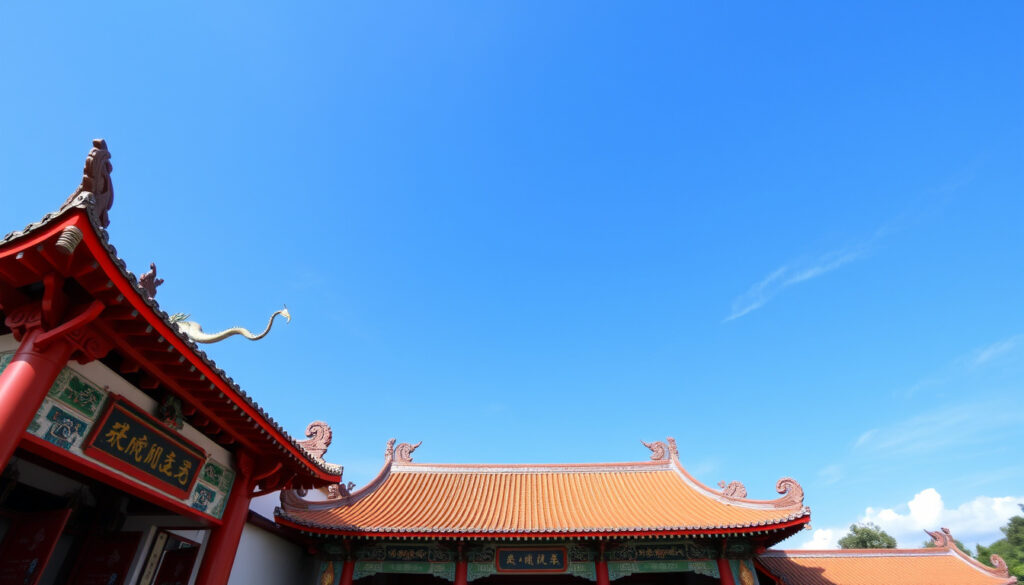
Thian Hock Keng Photos: Best Temple Images & Visitor Guide
If you’ve ever scrolled past a striking red-and-gold temple photo while browsing Singapore travel guides, there’s a good chance it was Thian Hock Keng. This centuries-old sanctuary in Chinatown draws photographers and pilgrims alike—the architecture tells stories that captions never could.
iStock Photos Available: 220 · Getty Images Count: 235 · Facebook Likes: 13,202 · Facebook Check-ins: 4,877
Quick snapshot
- Oldest Chinese temple in Singapore, dating to 1821 (National Library Board Singapore)
- Free admission and photography permitted inside (Chinatown Singapore)
- Gazetted as National Monument on 28 June 1973 (National Library Board Singapore)
- Exact founding year disputed (sources cite 1821, 1821–1822, or 1822)
- Current dress code specifics not formally published online
- 1821: First prayer house erected on Telok Ayer shoreline (National Library Board Singapore)
- 1842: Main temple completed by craftsmen from China (National Library Board Singapore)
- 1849: Chung Wen Pagoda and Chong Boon Gate added (National Library Board Singapore)
- Visit during Chinese New Year for the most dramatic photo opportunities
- Stock photo collections continue expanding on iStock and Getty
The table below consolidates the key facts about Thian Hock Keng Temple from authoritative sources.
| Label | Value |
|---|---|
| Status | Oldest Chinese Temple in Singapore |
| Type | Hokkien Temple |
| Primary Deity | Mazu (Goddess of the Sea) |
| Address | 158 Telok Ayer Street |
| Admission | Free |
| Photos Allowed | Yes |
| Managed By | Singapore Hokkien Huay Kuan |
| Gazetted | 28 June 1973 |
What is the meaning of Thian Hock Keng?
The name “Thian Hock Keng” translates from Hokkien as “Heavenly Virtue” or more fully “Palace of Heavenly Happiness,” reflecting the temple’s original purpose as a sanctuary for seafarers seeking protection from storms and safe passage across the seas. Fujian immigrants who arrived in Singapore during the early 19th century established this sacred space to honor Mazu, the goddess venerated as guardian of fishermen and traders navigating the South China Sea.
Etymology and translation
The temple’s name carries deep spiritual weight. “Thian” means heaven or heavenly, while “Hock” denotes virtue or blessing. “Keng” refers to a temple or palace. Together, the name encapsulates the devotees’ belief that the goddess Mazu watches over those who venture onto the waters. The National Library Board Singapore records that the original prayer house served the Hokkien community from its establishment, making the name not merely decorative but a declaration of purpose.
Cultural significance
Thian Hock Keng stands as Singapore’s oldest Hokkien temple, a distinction that places it at the center of the island’s Chinese religious heritage. The temple predates many of Singapore’s other religious institutions and serves as a living link to the generations of immigrants who built their new lives in this island city-state. According to Visit Singapore (Singapore Tourism Board), the temple represents “southern Chinese architecture” at its finest, featuring detailed carvings, sculptures of dragons and phoenixes, and Fujian porcelain roof techniques.
The temple’s name literally promises what it delivers: spiritual refuge. For Fujian immigrants arriving in an unfamiliar land, having a dedicated space to honor their sea goddess meant their faith could travel with them.
What is the Thian Hock Keng Temple famous for?
Thian Hock Keng draws attention for its status as one of the oldest Hokkien temples in Singapore, but the fame extends beyond mere age. The structure showcases architectural mastery that visitors and photographers find irresistible—curved ridges, upturned swallowtail roof designs, and imposing columns carved with mythological figures. The temple also holds imperial significance: Qing Dynasty Emperor Guang Xu presented a plaque reading “Gentle Waves over the South Seas,” a gift that underscores the sanctuary’s importance to the Chinese diaspora community.
Architectural highlights
The temple exemplifies traditional southern Chinese building techniques. AASingapore notes that the roofs feature characteristic Hokkien style with curved ridges and upturned swallowtail designs. Inside, worshippers and visitors encounter carvings of dragons, phoenixes, intricate sculptures, and imposing columns. The structure was built without nails—a remarkable feat achieved by craftsmen from China who completed the main temple in 1842. The three halls (entrance, main prayer, and rear hall) each serve distinct purposes in the temple’s ceremonial life.
Historical importance
Philanthropist Tan Tock Seng funded the temple’s reconstruction in 1839, transforming the original joss house into the grand sanctuary visitors see today. The wrought iron gates installed in 1906, imported from Glasgow, represent the temple’s connections to international trade routes that brought both goods and faith to Singapore’s shores. The local Chulia Muslim community contributed to construction costs, a detail Chinatown.sg highlights as evidence of the religious harmony characterizing Singapore’s early years.
The temple’s architecture tells a story of immigrant determination. Built by Chinese craftsmen using traditional methods, funded by a wealthy benefactor, and supported by diverse communities, Thian Hock Keng embodies the collaborative spirit that shaped Singapore itself.
What religion is the temple of Thian Hock Keng?
Thian Hock Keng operates as a Taoist temple dedicated primarily to Mazu, the sea goddess worshipped across coastal China and throughout Southeast Asian Chinese communities. While the temple’s management falls under the Singapore Hokkien Huay Kuan, the religious practices observed there draw from the broader Taoist tradition, incorporating ancestor veneration, fortune-telling rituals, and incense burning that characterize Taoist worship spaces.
Primary deity
Mazu, also known as (Mazu), holds the position of principal deity at Thian Hock Keng. The National Library Board Singapore records that the Mazu statue arrived from Amoy in April 1840, establishing the temple’s spiritual anchor before construction finished in 1842. Followers seek Mazu’s intercession for safe travels, prosperous business, and family well-being. The goddess’s popularity among seafarers made her an ideal patron for a community whose livelihood depended on maritime trade.
Associated beliefs
Visitors to Thian Hock Keng will notice the blending of beliefs that defines Singapore’s religious landscape. Beyond Mazu, the temple honors other deities common to Taoist practice, including Guanyin (Goddess of Mercy) and various ancestors. The Chung Wen Pagoda, added in 1849, was dedicated to learning, literature, and poetry, reflecting the community’s aspirations beyond mere survival. Adobe Stock offers night view photos of the temple that capture how the sanctuary transforms after dark, with lit incense and glowing lanterns creating a distinctly different atmosphere from daytime visits.
Thian Hock Keng serves as an active religious site, not merely a museum piece. Worshippers still light incense, seek divination, and leave offerings—meaning visitors may encounter devotees engaged in sincere spiritual practice. Respectful behavior matters.
What is the dress code for the Thian Hock Keng?
While no formal dress code appears on the temple’s official website, visitors should dress modestly out of respect for the active worship occurring within the sanctuary. Singapore’s tropical climate makes lightweight but covering clothing the practical choice—long pants or knee-length skirts paired with shirts covering shoulders and midriff. Visitors removing shoes before entering inner halls demonstrates traditional respect observed at many Taoist temples.
Appropriate attire
Conservative dress signals respect for the sacred space and fellow visitors engaged in worship. Loose-fitting cotton clothing works well given Singapore’s humidity. Light colors are preferable to flashy patterns that might distract from the temple’s spiritual atmosphere. Many visitors opt for business casual or smart casual attire, erring on the side of more coverage rather than less.
Prohibited clothing
Visitors should avoid wearing clothing bearing images of deities or sacred symbols from other religions, as this may cause offense. Revealing clothing such as tank tops, shorts above the knee, and crop tops should be reconsidered given the temple’s active religious function. Flip-flops can be worn but expect to remove them at various points during your visit, so easy-to-remove footwear proves more convenient.
“It is an architectural masterpiece of stone, tiles and wood, carvings of dragons and phoenixes, intricate sculptures and imposing columns.”
What are the best Thian Hock Keng photos?
Finding high-quality Thian Hock Keng photos has never been easier, thanks to major stock image platforms offering extensive collections. iStock provides 220 royalty-free images of the temple, including interior views and exterior shots capturing the distinctive architecture. Getty Images hosts 235 high-resolution photos ranging from daytime shots of the entrance gates to Chinese New Year celebration images showing the temple draped in red decorations and glowing lanterns.
Stock photo sources
The major stock libraries offer the most reliable options for professional-quality images. iStock’s collection includes photos from September 2022, ensuring relatively current views of the temple’s interior and surrounding Chinatown streets. Getty Images provides authentic high-resolution photos suitable for print publications and large-format displays. Adobe Stock offers unique night view options that capture the temple’s atmospheric lighting, while Alamy focuses specifically on Mazu-themed imagery at the sanctuary. Dreamstime provides additional options for budget-conscious projects.
Visitor photo tips
For visitors planning to photograph the temple themselves, several strategies improve results. Early morning visits around 8-9 AM catch the best natural light and avoid crowds that gather by mid-morning. The wrought iron gates and facade make strong subjects for exterior shots, while interior photography works best on weekdays when worshippers are less numerous. Wikipedia notes the temple originally faced the sea before 1880s land reclamation, so understanding its historical relationship to the waterfront helps contextualize architectural decisions visible in photos.
Stock photos offer polished, professional images ideal for commercial use, but they lack the personal perspective visitors bring home. A visitor’s photo of that specific moment of incense smoke spiraling upward cannot be replicated—that authenticity has value beyond stock library convenience.
Timeline
First prayer house erected by Fujian immigrants on Telok Ayer shoreline for Mazu worship
National Library Board Singapore
Patron deity Mazu statue arrives from Amoy
National Library Board Singapore
Temple rebuilt and expanded with funding from philanthropist Tan Tock Seng
Chung Wen Pagoda and Chong Boon Gate added
National Library Board Singapore
Wrought iron gates imported from Glasgow installed
Gazetted as Singapore National Monument
National Library Board Singapore
Confirmed facts
- Oldest Chinese temple status in Singapore
- Free entry and photography permissions
- Construction timeline (1839–1842)
- Mazu as primary deity
- Managed by Singapore Hokkien Huay Kuan
- National Monument status since 1973
- 235+ Getty Images photos available
What’s unclear
- Exact founding year (disputed across sources)
- Current dress code (no formal publication)
- Recent renovation details
- Visitor statistics
What people say
“Surrounded by some of the high-rise buildings of the financial district stands the oldest temple in Singapore, the famous Thian Hock Keng, or the ‘Palace of Heavenly Happiness.'”
“The Thian Hock Keng Temple is the oldest Chinese monument in Singapore.”
“It is an architectural masterpiece of stone, tiles and wood, carvings of dragons and phoenixes, intricate sculptures and imposing columns.”
— Chinatown Singapore heritage site
Summary
Thian Hock Keng stands as a living bridge between Singapore’s immigrant past and its present identity as a multireligious, multicultural metropolis. The temple’s journey from 1821 waterfront prayer house to National Monument reflects the determination of Hokkien seafarers who brought their faith across the South China Sea. Today, the sanctuary offers both spiritual refuge and visual splendor—220 images on iStock, 235 on Getty, and countless visitor snapshots capturing the dragon carvings, red-lacquered pillars, and morning incense that make this place worth photographing. For travelers seeking authentic heritage sites and for image researchers hunting quality stock photos, Thian Hock Keng delivers on both fronts.
gettyimages.com, stock.adobe.com, en.wikipedia.org, commons.wikimedia.org, gettyimages.com, worldtoptop.com, alamy.com, iccs.sg
Thian Hock Keng exemplifies Singapore’s ancient Chinese worship sites, much like the nearby Paya Lebar Sivan Temple that preserves Hindu traditions for modern visitors.
Frequently asked questions
Where is Thian Hock Keng Temple located?
The temple sits at 158 Telok Ayer Street in Singapore’s Chinatown district. The nearest MRT stations are Telok Ayer (Downtown Line) and Chinatown (North South and Downtown Lines). Several bus routes stop nearby, making the location accessible via public transportation from anywhere on the island.
When was Thian Hock Keng Temple built?
The original prayer house dates to 1821, established by Fujian immigrants on the Telok Ayer shoreline. The current structure was rebuilt from 1839 to 1842 under philanthropist Tan Tock Seng’s patronage, designed and built by craftsmen from China using traditional techniques without nails.
How to visit Thian Hock Keng Temple?
Visit during operating hours (typically early morning to late afternoon) for free entry. Walk through the wrought iron gates imported from Glasgow in 1906, removing shoes before entering inner halls. Spend time in all three halls—the entrance, main prayer, and rear hall—to appreciate the full scope of the temple’s architecture.
What to see at Thian Hock Keng Temple?
Key features include the distinctive curved roof ridges with upturned swallowtail design, dragon and phoenix carvings, imposing columns, the imperial plaque from Qing Emperor Guang Xu, the Chung Wen Pagoda added in 1849, and the Chong Boon Gate. The Mazu statue that arrived from Amoy in April 1840 remains the spiritual centerpiece.
Best time to photograph Thian Hock Keng?
Early morning between 8 and 9 AM offers optimal lighting and minimal crowds. Weekdays provide quieter conditions than weekends. Chinese New Year transforms the temple with red decorations and glowing lanterns ideal for atmospheric shots. Night views from Adobe Stock show the temple’s atmospheric lighting potential after dark.
Is Thian Hock Keng the oldest temple in Singapore?
Yes, Thian Hock Keng holds the distinction of being Singapore’s oldest Hokkien temple and oldest Chinese monument. It was gazetted as a National Monument on 28 June 1973, formalizing its protected status within Singapore’s heritage framework.
Can you take photos inside Thian Hock Keng?
Photography is permitted inside the temple. Visitors should remain respectful of worshippers engaged in prayer and avoid using flash in areas where incense is burning. The interior’s red columns, dragon carvings, and ceiling details photograph well, especially on weekdays when the temple is less crowded.
More related posts
 House of the Dragon Season 3: Renewal, Release Date
 67 Pall Mall Singapore: Membership, Cost & Ownership Guide
 Mount Alvernia Shuttle Bus: Free Timetable & Routes
 Kafka Topic Explained: Definition, Examples, and Key Concepts
 Peach Airlines Singapore to Osaka: Review & Prices
 How to Read a Pay Stub: Step-by-Step Guide
 West Coast GRC: MPs, Boundaries & 2025 Changes
 Transtar Bus to JB: Schedule, Price & Booking
