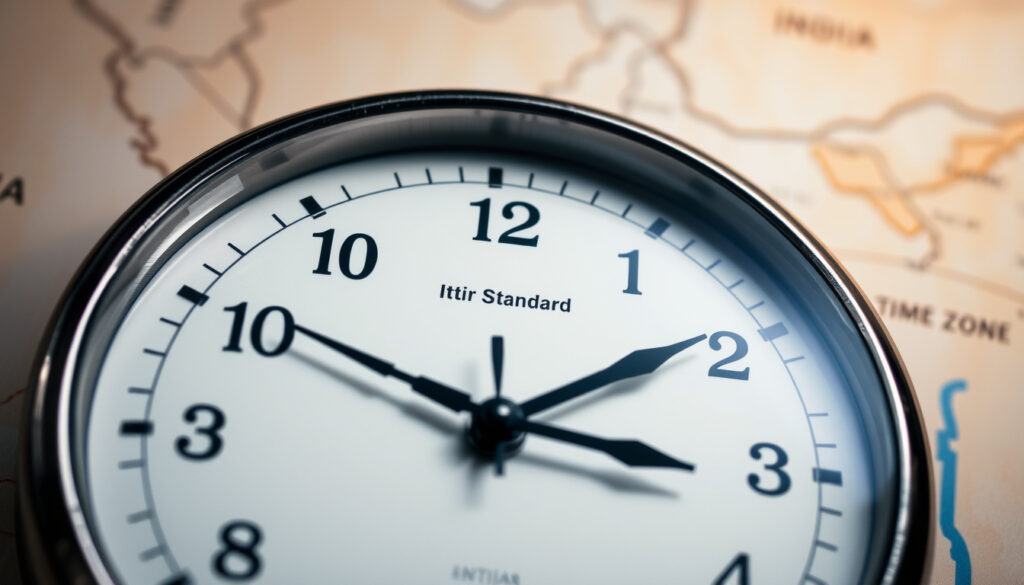
Time in India Now: Current Local Time, Time Zone, and Conversions
If you’ve ever tried to schedule a call with someone in India, you’ve probably noticed something curious: the time difference is often a half‑hour, not a whole hour. India runs on Indian Standard Time (IST) — a single, year‑round time zone that sits at UTC+5:30 and doesn’t observe daylight saving.
Time Zone: Indian Standard Time (IST) — UTC+5:30 ·
Current Offset: 5 hours 30 minutes ahead of Coordinated Universal Time (UTC) ·
Daylight Saving: None observed ·
Number of Time Zones: 1 (single zone nationwide)
Quick snapshot
- India uses IST (UTC+5:30) year‑round (timeanddate.com, a global time‑zone authority)
- No daylight saving time observed (WorldTimeServer, a time‑reference platform)
- Single official time zone since 1906 (timeanddate.com)
- Whether India will implement a separate time zone for northeastern states; proposals exist but no formal decision (Wikipedia entry on time in India)
- 1906 – Indian Standard Time adopted based on the 82.5°E meridian (Encyclopædia Britannica, a reference publisher)
- 2000s–present – Ongoing discussions about a second time zone for northeast India (Wikipedia entry on time in India)
- No change expected in the near term; the country will continue with a single IST time zone (timeanddate.com)
Six key facts that define how time works in India, from its official name to the capital city reference.
| Official time zone name | Indian Standard Time (IST) |
|---|---|
| UTC offset | UTC+5:30 |
| Daylight saving time | None |
| Number of time zones | 1 |
| ISO country code | IN |
| Capital city | New Delhi (current local time placeholder) |
What is the right time in India right now?
What is the current date and time in India?
The current local time in India is based on Indian Standard Time (IST), which is UTC+5:30. For the most accurate live reading — including seconds — consult authoritative sources such as time.is (a real‑time clock service) or the National Physical Laboratory of India (NPL India, the government timekeeper). NPL India is the official custodian of IST and provides a precise clock display on its website.
How is the time displayed with seconds?
- 12‑hour format: e.g., “05:30:15 PM”
- 24‑hour format: e.g., “17:30:15”
- Source: Wikipedia entry on time in India shows both formats for Indian cities.
Is the time shown in AM/PM or 24‑hour format?
Both are common. Indian official digital clocks and many websites use 24‑hour time, while everyday conversation and mobile phones often default to 12‑hour AM/PM. The country’s Wikipedia entry on time in India notes that no legal format is mandated, so either is acceptable.
What is the time in Mumbai right now?
Mumbai, India’s largest city by population, follows IST like the rest of the country. At any given moment, the time in Mumbai is the same as in New Delhi, Kolkata, Chennai, and every other Indian city. Use a live clock from Savvy Time (a time‑conversion tool) to see the current IST instant.
Because India operates on a single time zone, you never need to worry about separate “Mumbai time” or “Delhi time.” One IST reading works for the entire country.
What this means: For travellers and businesses, the single zone eliminates confusion across Indian destinations.
Why is Indian time 30 minutes ahead?
What is the history behind India’s time zone?
Indian Standard Time is based on the longitude 82°30′ E, the standard meridian that passes through Mirzapur, Uttar Pradesh (Encyclopædia Britannica, a reference publisher). When the Sun is directly overhead on this meridian, it is exactly noon in IST. The offset of UTC+5:30 was first adopted in 1906 under British rule and retained after independence in 1947 (timeanddate.com).
Why do some countries use half‑hour offsets?
Half‑hour time zones occur when a country’s geographical longitude falls roughly halfway between whole‑hour meridians. India’s vast east‑west span — about 30° of longitude — makes a whole‑hour offset either too early or too late for large portions of the country. Several other nations (e.g., Iran, Afghanistan, Nepal) also use half‑hour offsets for similar geographic reasons (timeanddate.com).
If India used a whole‑hour offset, the easternmost state (Arunachal Pradesh) would experience sunrise before 4 a.m. in summer, while the westernmost (Gujarat) would still be dark. The half‑hour offset balances both ends.
The catch: The offset is a practical compromise, not a perfect fit for any single region.
Does India have two time zones?
Why does India keep a single time zone despite its large east‑west expanse?
India has exactly one official time zone nationwide. Proposals for a separate domestic time zone in the northeastern states — such as a UTC+6:00 zone for Assam and its neighbours — have been discussed since the 2000s but never implemented (timeanddate.com). The central government has argued that a single zone simplifies railway scheduling, airline timetables, and national administration. Critics point to wasted daylight in the northeast, where the sun rises and sets up to an hour earlier than in the west.
What this means: for now, every business meeting, train departure, and movie‑showtime across India follows the same IST clock. The trade‑off is that citizens in Dibrugarh (east) start their day in near‑darkness during winter, while people in Jamnagar (west) enjoy brighter mornings.
Opponents of the single‑zone policy argue it costs the northeast millions of hours of productive daylight each year, yet the government sees too many logistical hurdles in splitting the time.
The pattern: India’s uniform time remains a centralised administrative convenience with regional costs.
What is GMT time in India right now?
How do I convert GMT to IST?
IST = GMT + 5 hours 30 minutes. When it is 00:00 (midnight) in Greenwich, it is 05:30 in India. Conversely, when it is 12:00 noon GMT, it is 17:30 IST. The relationship is fixed because India does not observe daylight saving (WorldTimeServer, a time‑reference platform).
Is India ahead of GMT?
Yes. India is 5 hours 30 minutes ahead of GMT/UTC. That means any time in India is always later than GMT. For example:
- GMT 10:00 → IST 15:30
- GMT 22:00 → IST 03:30 (next day)
What does GMT+5:30 mean?
GMT+5:30 is simply another way of writing Indian Standard Time. It indicates that when the Sun is at its zenith in Greenwich (0° longitude), the clock in India has already advanced by 5 hours and 30 minutes.
“IST is five and a half hours ahead of GMT/UTC equivalents in common converter references,” notes WorldTimeServer.
WorldTimeServer time zone description
“The time zone Asia/Kolkata is the canonical IANA identifier for India Standard Time,” states time.is.
time.is time zone reference
The implication: GMT+5:30 is the permanent tag for Indian time, requiring no seasonal adjustments.
How can I convert my time to India time?
How to convert India time to GMT
Subtract 5 hours 30 minutes from IST to get GMT. Example: IST 14:00 → GMT 08:30. Use a reliable converter like timeanddate.com or simply subtract the offset mentally.
How to convert India time to UK time
The UK uses GMT in winter and British Summer Time (BST, UTC+1) in summer. During GMT (late October to late March): IST to UK: subtract 5h 30m. During BST (late March to late October): subtract 4h 30m. For example:
- IST 15:00 → London (GMT) 09:30
- IST 15:00 → London (BST) 10:30
What is 4 GMT in India?
4:00 GMT = 9:30 IST (same day). Because 4 + 5.5 = 9.5. Add the offset and you’re done.
Step‑by‑step conversion guide
- Identify your time zone offset from UTC. For example, US Eastern Time is UTC‑5 (EST) or UTC‑4 (EDT).
- Find the difference in hours and minutes from your offset to UTC+5:30. If you are at UTC‑5, the total difference is 10 hours 30 minutes.
- Add the difference to your local time. If it’s 10:00 AM EST, add 10h 30m → 8:30 PM IST.
- Cross midnight boundaries if needed. Adding your 10.5 hours may push the result into the next calendar day. Use an online converter to be safe.
en.wikipedia.org, timesofindia.indiatimes.com, worlddata.info, savvytime.com, worldtimeserver.com
Frequently asked questions
What time zone is used in India?
Indian Standard Time (IST), offset UTC+5:30.
How many hours ahead is India from the USA?
Depending on the US time zone: EST → +10.5 hours (EST) or +9.5 hours (EDT); CST → +11.5 hours (CST) or +10.5 hours (CDT); PST → +13.5 hours (PST) or +12.5 hours (PDT).
Does India observe daylight saving time?
No. India stays on UTC+5:30 year‑round.
Why is India 5 hours and 30 minutes ahead of UTC?
Because the standard meridian chosen for IST is 82°30′ E, which sits halfway between the whole‑hour meridians of 75°E and 90°E.
How can I see the current time in India with seconds?
Visit time.is or the National Physical Laboratory of India for live clocks with second‑precision.
Is there a time difference between Mumbai and New Delhi?
No. Both cities use IST, so they share the same local time.
What is the IANA time zone identifier for India?
Asia/Kolkata.
Does India ever change its clocks for summer?
No. India has never adopted daylight saving time since 1947.
Confirmed facts
- India uses IST (UTC+5:30) year‑round (timeanddate.com)
- No daylight saving time (WorldTimeServer)
- Single official time zone since 1906 (timeanddate.com)
- Standard meridian 82.5°E through Mirzapur (Encyclopædia Britannica)
- IANA zone identifier: Asia/Kolkata (time.is)
What remains unclear / low‑confidence
- Whether a second time zone for northeast India will ever be adopted
- Some sources list India Standard Time as 9 hours 30 minutes ahead of New York, but the exact value depends on DST in the US (according to time.is)
- Mumbai is sometimes described as the largest city in the IST zone (Savvy Time), a claim that could shift with census data
- The abbreviation IST can also refer to Irish Standard Time or Israel Standard Time, causing potential confusion
- Some references describe India Standard Time as also called India Time (IT), though this is uncommon
For travelers and businesses, understanding India’s fixed time zone simplifies scheduling, but always account for daylight saving in other regions.
Related reading: Gold Price Today: Tamil Nadu – 22K, 24K & 916 Pavun · 400°F to Celsius Conversion: Oven, Fan, Air Fryer Guide
More related posts
 SG Car Plate Check: How to Verify Owner, Road Tax & More
 Blanco Court Fish Soup – Locations History and Guide
 OCBC Bank Branch Code: How to Find It in Singapore (7339)
 Singapore Airlines Cabin Crew Salary 2025: Pay Breakdown
 Allianz Travel Insurance Singapore: Coverage, Cost & Exclusions
 How to Use Slow Motion CapCut Template Free in 2025
 Ian Fang Ex Girlfriend – Identity, Timeline and What Happened
 Holland Road Shopping Centre: Shops, Map, Hours & Parking
