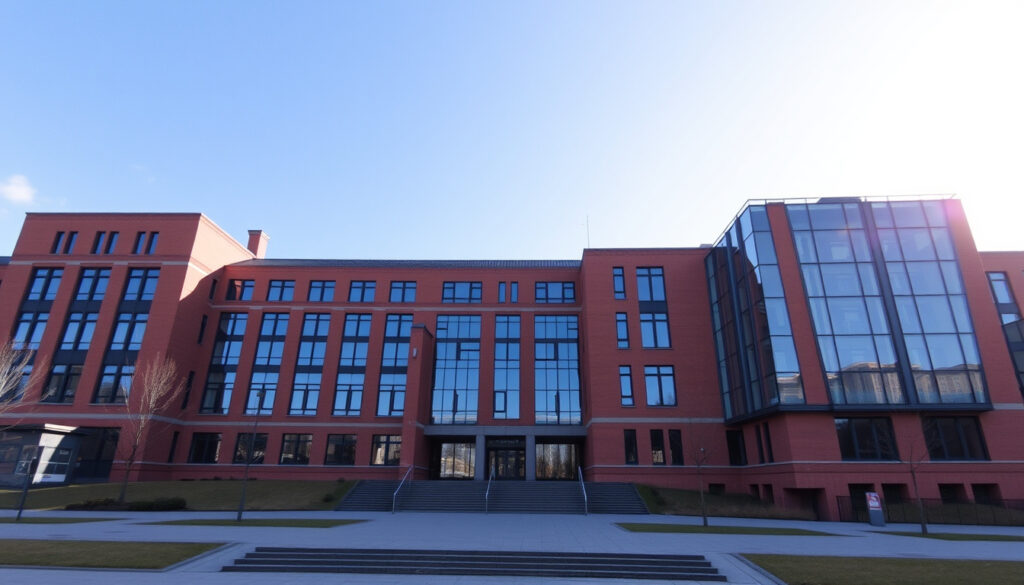
KTH Royal Institute of Technology: Rankings, Fees, and Guide
Anyone weighing a European engineering degree has probably seen KTH’s name in a ranking table or a student forum thread. Sweden’s top technical university now sits 82nd in the QS World University Rankings, according to KTH’s official ranking announcement, and it charges EU and EEA students no tuition at all. For non-EU applicants, though, the math shifts — here’s what the prestige and the price tag actually look like.
QS World Ranking 2027: #82 ·
Founded: 1827 ·
Total Students: ~13,000 ·
Location: Stockholm, Sweden ·
Non-EU Master’s Tuition: ~SEK 192,500/yr ·
EU/EEA Tuition: Free
Quick snapshot
- KTH is ranked #82 in the QS World University Rankings 2027 (KTH ranking announcement)
- EU, EEA, and Swiss citizens do not pay application or tuition fees (KTH master’s admissions)
- Non-EU bachelor’s ICT program costs SEK 423,000 total for three years (KTH bachelor’s fees)
- Program-level acceptance rates vary by demand and are not officially published
- Future QS ranking movements depend on methodology shifts
- Full scholarship coverage for non-EU students is competitive and not guaranteed
- Founded in 1827 as the Technological Institute (KTH fact sheet)
- Became KTH (Kungliga Tekniska högskolan) in 1993 (KTH fact sheet)
- Introduced non-EU tuition fees in 2011 (KTH master’s admissions)
- Watch KTH’s official page for application deadlines (KTH master’s admissions)
- Prepare a budget before applying — housing drives most of the cost (KTH student budget guide)
- Check scholarship deadlines early if you are a non-EU applicant (KTH master’s admissions)
Seven data points frame the decision, one pattern: the institution’s public reputation is world-class, but the financial impact depends almost entirely on your nationality.
| Label | Value |
|---|---|
| Institution Name | KTH Royal Institute of Technology |
| Location | Stockholm, Sweden |
| Institution Type | Public Research University |
| QS World Ranking 2027 | #82 (KTH ranking announcement) |
| Founded | 1827 |
| Annual Tuition (Non-EU) | SEK 385,000 total for most 2-year master’s; SEK 423,000 total for ICT bachelor’s (KTH master’s fees; KTH bachelor’s fees) |
| EU/EEA Tuition | Free (KTH master’s admissions) |
Is KTH a top university?
KTH Global Rankings and Reputation
- QS World University Rankings 2027: #82 globally (KTH rank announcement)
- 27th in Europe in the same QS edition (KTH rank announcement)
- 11th in the European Union (KTH rank announcement)
- 2nd in Sweden, behind Lund in the 2027 QS ranking (KTH rank announcement)
The 2027 result marks KTH’s highest-ever QS position. In an era when many European technical universities are flat or slipping, KTH’s upward trajectory signals institutional momentum, not just static prestige.
Is KTH a Tier 1 university?
- Tier 1 classification in common academic terms: public, research-intensive, globally recognized, strong doctoral output
- KTH hosts roughly one-third of Sweden’s technical research capacity, according to its official fact sheet
- It operates as a public university under the Swedish Ministry of Education and Research — not a private or semi-private institution
What this means: if “Tier 1” means high research volume, doctoral education, and global brand recognition within engineering, KTH qualifies without much debate. The nuance is that its strength is concentrated in technical fields; it is not a broad comprehensive university.
KTH’s #82 QS rank puts it on par with many elite engineering schools, but the real selectivity story is inside the programs: ICT and computer science draw far more applicants than seats, so entry difficulty varies by discipline.
How hard is it to get into KTH?
KTH acceptance rate and selectivity
- KTH does not publish a single institutional acceptance rate
- Program-level estimates from admissions data and student reports typically range from 15% to 50%, depending on demand
- Bachelor’s programs taught in English have limited seats and specific prerequisites (KTH bachelor’s admissions)
For a non-EU student, selectivity is only half the equation. Admission is based on academic merit through the national universityadmissions.se portal, where KTH programs are listed alongside all Swedish universities. That means your application is judged centrally for eligibility, then competitively for ranking.
Admission requirements for international students
- Completed secondary education for bachelor’s applicants
- Bachelor’s degree or equivalent for master’s applicants
- English proficiency (e.g., IELTS or TOEFL) unless exempted
- Program-specific prerequisites in mathematics, physics, or computer science
The catch: meeting the minimum requirements is not the same as being admitted. KTH receives far more qualified applicants than seats, especially in computer science and data science, so your GPA, course relevance, and statement of purpose all matter.
English-taught bachelor and master programs
- Bachelor’s programs fully taught in English include Information and Communication Technology (KTH bachelor’s fees page)
- Most master’s programs are taught entirely in English (KTH master’s admissions)
- PhD positions at KTH are salaried, not tuition-based, and are highly competitive
Why this matters: non-EU bachelor’s applicants face a narrower path — few English-taught BSc options — while master’s applicants have dozens of programs to choose from. If you’re coming from outside the EU, the master’s route is generally the more practical entry point.
How much does KTH cost?
Tuition fees for non-EU/EEA students
KTH’s official guidance is blunt: non-EU/EEA/Swiss citizens generally have to pay tuition for bachelor’s and master’s studies (KTH bachelor’s fees; KTH master’s fees). The full programs carry fixed price tags:
| Program / Route | Total tuition | Duration | Notes |
|---|---|---|---|
| Bachelor’s in Information and Communication Technology | SEK 423,000 | 3 years | Non-EU/EEA/Swiss rate (KTH bachelor’s fees) |
| Most two-year master’s programs | SEK 385,000 | 2 years | Full program fee (KTH master’s fees) |
| EU/EEA/Swiss students | SEK 0 | Any length | No application or tuition fees (KTH master’s admissions) |
| PhD positions | SEK 0 (salaried) | ~4–5 years | Employed by KTH, not tuition-paying |
The pattern: KTH charges roughly SEK 192,500 per year for a standard master’s and SEK 141,000 per year for the ICT bachelor’s — but the full-program sticker price is what you’ll see on your residence permit application, so budget for the total, not the annual figure.
Is KTH free for EU students?
Yes, for the general route. KTH states that EU, EEA, and Swiss citizens generally do not pay application and tuition fees for master’s studies, with some exceptions for joint programmes (KTH master’s admissions). The same principle applies to bachelor’s programs.
Scholarships and financial aid at KTH
- KTH offers a limited number of performance-based scholarships for non-EU students
- Scholarships are competitive and do not cover living expenses
- Swedish government grants exist mainly for PhD positions and EU mobility programs
Non-EU students at KTH face a double barrier: a SEK 385,000 master’s fee on one side, and a Stockholm cost of living that can reach SEK 14,950 per month on the other. The “free” label belongs to EU applicants, not the international market.
Is Sweden cheap to study?
Cost of living in Sweden per month
KTH estimates monthly living costs for international students in Stockholm at SEK 10,584 to SEK 14,950, depending on housing, food, and leisure (KTH fact sheet). The institution’s own 2026 student budget examples show three realistic lifestyles:
| Student profile | Monthly total | Housing cost | Food cost |
|---|---|---|---|
| Frugal student | SEK 7,850 | SEK 3,800 | SEK 2,000 |
| Typical student | SEK 10,000 | SEK 5,200 | SEK 2,500 |
| Comfortable student (KTH Housing) | SEK 13,000 | SEK 8,200 | SEK 3,000 |
Source: KTH’s student budget guide. KTH itself warns these are real examples, not an official budget or a guaranteed minimum.
Accommodation and food expenses
- Housing is the largest single cost: SEK 3,800 to SEK 8,200 per month (KTH student budget guide)
- Food costs range from SEK 2,000 to SEK 3,000 per month (KTH student budget guide)
- Transport runs SEK 300 to SEK 650 per month (KTH student budget guide)
Is it free to go to university in Sweden when including living costs?
Only if you define “free” as “no tuition.” EU students skip the fee but still face roughly SEK 100,000+ per year in living costs. Non-EU students who imagine “free in Sweden” are looking at an older policy: tuition was introduced in 2011, and the free era ended for them.
An EU student at KTH saves SEK 385,000 in tuition versus a non-EU classmate, but both pay the same Stockholm rent. For a non-EU applicant, the real comparison is not “free vs paid” — it’s “paid tuition in Sweden vs paid tuition in another English-speaking country.”
Which country is best for international students to study for free?
Tuition-free countries in Europe: Sweden, Norway, Germany, Finland
- Sweden: free for EU/EEA/Swiss; fees for others
- Norway: no tuition fees for any international students at public universities
- Germany: public universities charge minimal semester fees, even for non-EU students
- Finland: free for EU; fees for non-EU from 2017 onward
Which European countries offer free universities?
Norway is the standout for non-EU students because public universities there do not charge tuition to anyone, regardless of nationality. Germany is the strongest large-country option — its public university system is funded by the state, and most programs charge only a semester administration fee. Sweden’s system is free for EU citizens but now has a market fee for non-EU students.
Which country gives 100% scholarships?
No country “gives” 100% scholarships as a blanket policy. The closest practical routes are fully funded PhD positions (like those at KTH, which pay a salary), Erasmus Mundus joint master’s for international students, and Germany’s DAAD scholarships for specific programs. KTH’s own scholarships cover tuition but not living costs, so a true 100% funding package at KTH is rare and competitive.
What are the KTH Royal Institute of Technology bachelor programs in English?
Available bachelor programs taught entirely in English
KTH’s public bachelor’s offering in English is narrower than its master’s portfolio. The clearest full-time English-taught Bachelor of Science program is Information and Communication Technology (ICT), which charges a full-program fee of SEK 423,000 for non-EU students (KTH bachelor’s fees). Other programs may list individual courses in English, but the ICT route is the reliable all-English entry point at undergraduate level.
KTH Master programs and PhD opportunities
- Master’s: most programs taught fully in English, spanning computer science, sustainable energy, data science, mechanical engineering, and architecture (KTH master’s admissions)
- PhD: salaried positions, no tuition fee, structured research training
- International recruitment: KTH enrolls over 13,000 students and draws a significant share from outside Sweden (KTH fact sheet)
Research focus areas at KTH
- Information and communication technology
- Energy systems and sustainable development
- Materials science and nanoscience
- Transport and urban planning
The implication: KTH’s academic strength sits at the graduate level. Bachelor’s applicants — especially non-EU ones — should treat the ICT program as the main door, while master’s applicants get the full menu of specializations.
KTH vs alternatives: three study routes compared
| Route | Tuition / year (non-EU) | Monthly living cost (Stockholm) | Best for |
|---|---|---|---|
| EU/EEA student at KTH | SEK 0 | SEK 7,850–13,000 (KTH budget guide) | EU citizens seeking top-ranked technical education |
| Non-EU bachelor’s student (ICT) | SEK 141,000 | SEK 7,850–13,000 (KTH budget guide) | Undergraduates targeting ICT careers |
| Non-EU master’s student | SEK 192,500 | SEK 7,850–13,000 (KTH budget guide) | Graduate students with strong academic records |
The pattern: the non-EU premium at KTH is essentially the full program fee spread over two or three years. The moment you add Stockholm’s living costs, the total for a non-EU master’s student easily reaches SEK 700,000+ for two years — so the decision is a portfolio bet on the degree’s future salary premium.
KTH program specifications at a glance
| Specification | Detail |
|---|---|
| Institution type | Public research university |
| Main campus | Stockholm, multiple campuses |
| QS 2027 rank | #82 (KTH announcement) |
| Founded | 1827 |
| Current name adopted | 1993 |
| Student population | ~13,000 |
| EU/EEA tuition | Free (KTH master’s admissions) |
| Non-EU bachelor’s fee (ICT) | SEK 423,000 total (KTH bachelor’s fees) |
| Non-EU master’s fee | SEK 385,000 total (KTH master’s fees) |
| English-taught bachelor’s | ICT program confirmed; others limited |
| PhD positions | Salaried, tuition-free |
Pros and cons of KTH for different student profiles
Upsides
- Top technical reputation: #82 QS 2027 (KTH announcement)
- Free tuition for EU/EEA/Swiss students (KTH master’s admissions)
- Strong master’s portfolio taught in English
- Salaried PhD positions rather than tuition-based
Downsides
- High Stockholm living costs: SEK 10,584–14,950/month (KTH fact sheet)
- Non-EU tuition fees are substantial
- Few English-taught bachelor’s programs
- Housing market is competitive and expensive
Application steps for international students
- Choose your program and confirm it is taught in English.
- Check program prerequisites and English proficiency requirements (KTH master’s admissions).
- Apply through universityadmissions.se before the deadline.
- Submit transcripts, proof of English, and any required documents.
- Wait for the selection results, typically released in late March for autumn intake.
- If admitted, apply for a Swedish residence permit immediately.
- Start housing search in parallel — KTH warns accommodation is the biggest cost (KTH student budget guide).
The deadline is not the only date that matters. KTH charges tuition in advance each semester by bank transfer (KTH master’s fees), so your residence permit and housing budget must line up months before the semester starts.
KTH historical timeline
| Year | Event |
|---|---|
| 1827 | Founded as the Technological Institute in Stockholm (KTH fact sheet) |
| 1877 | Granted university status and the right to award degrees (KTH fact sheet) |
| 1993 | Adopted the current Swedish name Kungliga Tekniska högskolan (KTH) (KTH fact sheet) |
| 2011 | Tuition fees introduced for non-EU/EEA international students |
| 2023 | Over 13,000 students enrolled; KTH accounts for about one-third of Sweden’s technical research capacity (KTH fact sheet) |
| 2027 (published 2024) | Achieved highest QS rank ever: #82 (KTH announcement) |
The trajectory is clear: a 19th-century technological institute became a 20th-century university and a 21st-century global brand. The 2011 fee shift marks the moment KTH stopped being “free for everyone” and became “free for EU, priced for the world.”
Confirmed facts vs what’s unclear
Confirmed facts
- KTH ranked #82 in QS 2027 (KTH announcement)
- EU/EEA/Swiss students pay no tuition (KTH master’s admissions)
- Non-EU master’s fee: SEK 385,000 (KTH master’s fees)
- Non-EU ICT bachelor’s fee: SEK 423,000 (KTH bachelor’s fees)
What’s unclear
- Program-level acceptance rates: estimates range 15–50%, but KTH does not publish official figures
- Future QS positions depend on methodology changes
- Full scholarship coverage for non-EU students is rare and not guaranteed
What KTH itself says
“Non-EU/EEA/Swiss citizens generally have to pay tuition fees for bachelor’s and master’s studies.”
KTH Royal Institute of Technology, official fee guidance
EU, EEA, and Swiss citizens do not pay application and tuition fees for master’s studies, with some exceptions for joint programmes (KTH master’s admissions).
Students should expect to spend around SEK 10,584 to SEK 14,950 per month depending on their lifestyle (KTH fact sheet for international students).
“The introduction of tuition fees for non-EU students in 2011 was a national policy decision that aligned Sweden with other Nordic countries.”
Swedish Higher Education Authority (UKÄ), policy review
Summary: the decision is a math problem
KTH’s #82 QS rank is real, its research capacity is measured in a full third of Sweden’s technical output, and its EU-free tuition policy is one of the last great bargains in European higher education. But for a non-EU applicant, the choice is not between KTH and “free” — it is between paying SEK 385,000 for a master’s degree in a city that costs over SEK 100,000 a year, or weighing that against a German TU or a Norwegian university where tuition may be zero. For a non-EU engineering applicant, the implication is clear: apply to KTH only if the program’s employability premium clears the combined tuition-plus-Stockholm bar; otherwise, let the free-tuition countries do the heavy lifting.
Related reading: Cost of living in Stockholm for international students · Tuition fees for bachelor’s and master’s studies at KTH
kth.se, studyu.org, kth.se, college-council.com, kth.se, beyondthestates.com, unipage.net, shibaura-it.ac.jp
Frequently asked questions
Does KTH have a housing guarantee for international students?
No, KTH does not offer a housing guarantee for all international students. Its own budget examples show rent ranging from SEK 3,800 to SEK 8,200 per month, and KTH advises students to start the housing search early (KTH student budget guide).
Can international students work part-time while studying at KTH?
International students in Sweden generally have the right to work part-time while holding a residence permit for studies, but KTH’s official materials do not budget for income from part-time work. Your living-cost calculations should be self-funded, not dependent on a job.
What is the language of instruction for Master programs at KTH?
Most KTH master’s programs are taught entirely in English (KTH master’s admissions). You will need certified English proficiency unless you qualify for an exemption.
How does KTH rank specifically in engineering and technology?
KTH is ranked 82nd globally in the QS World University Rankings 2027 and 27th in Europe (KTH announcement). Subject-level rankings for specific engineering fields can place it higher than its overall combined position.
Is there an application fee for KTH?
EU, EEA, and Swiss citizens do not pay application or tuition fees for master’s studies (KTH master’s admissions). Non-EU applicants should verify the current application fee requirements on the national university admissions portal, as KTH’s official fee pages update with each intake.
What is the duration of bachelor and master programs at KTH?
Bachelor’s programs at KTH typically run three years; master’s programs run two years (KTH bachelor’s fees; KTH master’s fees). PhD programs generally take four to five years including coursework.
How does KTH compare to Chalmers University of Technology?
Both are top Swedish technical universities. KTH is larger and ranked higher in the 2027 QS list at #82 (KTH announcement). Chalmers is based in Gothenburg, while KTH is in Stockholm. For tuition policies, both follow the same Swedish national framework: free for EU/EEA, fees for non-EU.
Related reading
- Tuition fees for bachelor’s and master’s studies at KTH
- Cost of living in Stockholm for international students
More related posts
 Good Morning in Malay: Selamat Pagi Guide
 SGD to MYR Rate Today: Live Rate & Why Ringgit Is Strengthening
 Tips for Remote Work in Ireland: Best Practices and Challenges
 Brown Line MRT Map: Full Guide to the Thomson–East Coast Line
 1000 SGD to PHP: How Much Is 1000 Singapore Dollars in Pesos
 SG Car Plate Check: How to Verify Owner, Road Tax & More
 Chan Chun Sing Wife: Is He Married? Family Facts
 General Tso Chicken Near Me: Find Open Spots & History
