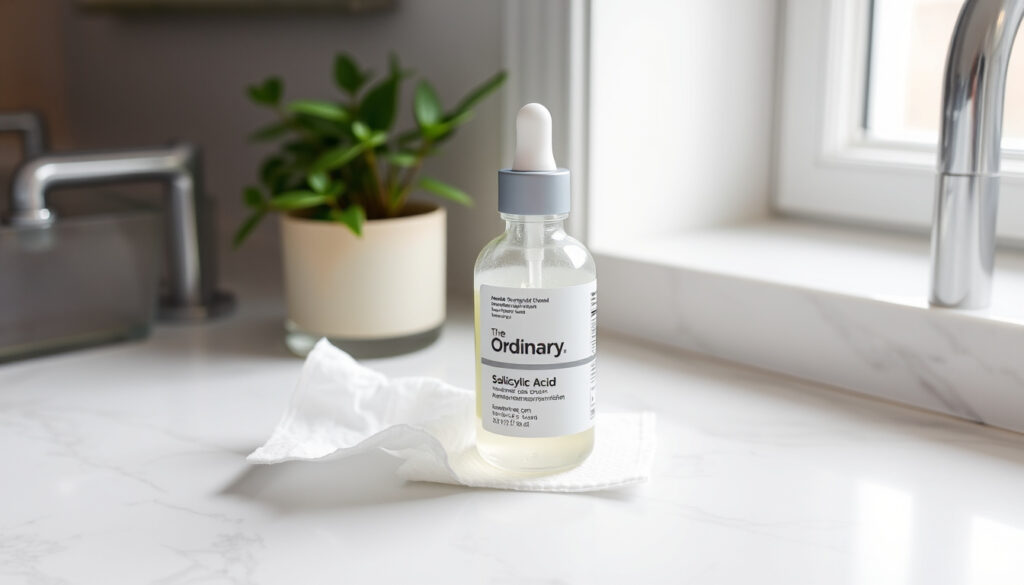
The Ordinary Salicylic Acid: Uses, Benefits, and Daily Routine
If you’ve ever peered into the mirror and spotted a constellation of tiny blackheads across your nose, you’re not alone. The quest for a simple, effective solution often leads to The Ordinary Salicylic Acid 2% Solution, a bare-bones serum that costs around $7.50 and promises to dissolve pore-clogging debris.
Concentration: 2% · Price (30 ml): $7.50 / €7.50 · Skin Type: All skin types, especially blemish-prone · Key Ingredient: Salicylic acid (beta hydroxy acid) · Usage Frequency: Once daily in the evening (if tolerated)
Quick snapshot
- The product contains 2% salicylic acid (The Ordinary)
- It is water-based and designed for daily use if tolerated (The Ordinary)
- Avoid combining with other strong exfoliants like AHAs and retinoids at the same time (Asaya Skincare)
- Exact time to see significant blackhead reduction varies by individual
- Effectiveness compared to prescription treatments not officially stated
- Consistent use may show visible improvement in 4–6 weeks (Healthline)
- Blackhead reduction begins after pores are consistently unclogged (Healthline)
- Complement with a non-comedogenic moisturizer and daily sunscreen
- Monitor skin tolerance and adjust frequency as needed
Seven key specs define this serum, one pattern: it strips out everything except the active ingredient and a minimalist base.
| Specification | Value |
|---|---|
| Product Name | The Ordinary Salicylic Acid 2% Solution |
| Concentration | 2% salicylic acid |
| Size | 30 ml / 1 oz |
| Price (approx) | $7.50 / €7.50 |
| Skin Type | All, especially blemish-prone |
| Usage | Once daily in the evening |
| Key Ingredients | Salicylic acid, purified water, propanediol |
The trade-off: you pay less but get no extras like soothing additives.
What does The Ordinary salicylic acid do?
How does salicylic acid exfoliate the skin?
- It dissolves the oil and debris that plug pores (Healthline)
- As an oil-soluble beta hydroxy acid, it penetrates deep into follicles (The Ordinary)
- Loosens dead skin cells from the surface to clear congestion
Salicylic acid works by breaking down the “glue” that holds dead cells together, allowing them to slough off. The Ordinary’s 2% concentration is the maximum allowed for over-the-counter products in many regions, making it potent enough for stubborn blackheads but gentle enough for daily use if your skin adapts.
What are the key benefits of The Ordinary Salicylic Acid 2% Solution?
- Unclogs pores and reduces congestion (The Ordinary)
- Smooths textural irregularities on the skin’s surface
- Helps prevent future breakouts when used consistently
This isn’t a spot treatment; it’s a preventive maintenance step. The brand markets it as “acne control,” but its real value for most users is keeping pores clear before blackheads form.
The implication: the product is most effective when used as a regular part of your evening routine, not as an emergency fix.
Is The Ordinary salicylic acid good for everyday use?
Can you use salicylic acid daily?
- The Ordinary recommends starting once daily in the evening (The Ordinary)
- Healthline advises beginning with a salicylic acid cleanser once daily and increasing frequency slowly (Healthline)
- Asaya Skincare suggests starting 2–3 times per week and building up (Asaya Skincare)
The short answer: yes, if your skin tolerates it. Oily skin types often handle daily use, while normal-to-dry or sensitive skin should ease in. The Ordinary’s official label allows up to three times daily, but its routine guidance emphasizes once-daily PM use to avoid over-drying.
What happens if you over-exfoliate?
- Excessive drying, peeling, and redness are signs to reduce frequency (The Ordinary)
- Healthline warns that some people can only tolerate salicylic acid every few days (Healthline)
- Combining with other exfoliants dramatically increases irritation risk
Over-exfoliation doesn’t come from the active itself but from stacking it with retinoids, AHAs, or physical scrubs. The trade-off: you get faster cell turnover but at the cost of barrier integrity if you push too fast.
The pattern: frequency is highly individual. Start low, go slow, and back off at the first sign of irritation.
Which salicylic acid is best for blackheads?
The Ordinary vs other salicylic acid serums
One comparison across three affordable options reveals a key difference in formulation and price point.
| Product | Concentration | Format | Price Range | Key Distinction |
|---|---|---|---|---|
| The Ordinary Salicylic Acid 2% | 2% | Water-based serum | $7.50 / €7.50 | Minimalist formula, ideal for mixing into routines |
| Paula’s Choice 2% BHA Liquid Exfoliant | 2% | Leave-on toner | $30+ | Contains additional soothing ingredients |
| CeraVe SA Cleanser | 0.5% (approx) | Cleanser | $10 | Lower concentration, ceramide-enriched |
Data for Paula’s Choice and CeraVe from brand product pages; concentration varies by region.
What to look for in a blackhead treatment
- Look for 2% salicylic acid for over-the-counter efficacy
- A water-based or alcohol-free formula to reduce irritation
- Consistency matters more than the specific brand
The trade-off: the cheapest product might lack soothing ingredients, but for many, The Ordinary’s no-frills approach is exactly what works.
What should you never mix with salicylic acid?
Ingredients that cause irritation when combined
- Retinoids (tretinoin, retinol) – use at separate times of day (Asaya Skincare)
- Vitamin C – avoid in the same routine; use vitamin C in the AM, salicylic acid in the PM
- Benzoyl peroxide – can cause excessive dryness and peeling
- Other AHAs (glycolic, lactic) – alternate days instead of layering
Safe layering order
- Cleanser → Salicylic acid serum → Moisturizer (Minimalist)
- Wait 1–2 minutes after applying before layering other products
- Always finish with sunscreen in the morning
Many over-exfoliation cases come from layering two BHA/AHA products without realizing it. Check all your serums, toners, and even moisturizers for exfoliating ingredients.
Why this matters: a single misstep in mixing can undo weeks of progress. The rule of thumb: keep the evening slot for your active, and let the rest of your routine be hydrating and barrier-supporting.
Does salicylic acid get rid of blackheads on the nose?
How salicylic acid targets blackheads
- It penetrates the pore to dissolve the plug of oil and dead skin (Healthline)
- Regular use prevents new plugs from forming
- The nose tends to have larger pores and more oil production, so it responds well to BHA
Nose blackheads: tips and duration
- Expect 4–6 weeks of consistent use to see a visible difference (Healthline)
- Combine with a non-comedogenic moisturizer to avoid rebound oiliness
- Gentle extraction after a warm shower can help, but never force
The pattern: salicylic acid works, but it’s not instant. Patience and consistency are the real active ingredients.
How to use The Ordinary salicylic acid (step by step)
- Cleanse face with a gentle, non-exfoliating cleanser and pat dry.
- Apply a few drops of The Ordinary Salicylic Acid 2% Solution to clean, dry skin (The Ordinary).
- Spread a thin layer over the affected area (avoid eye area).
- Wait 1–2 minutes for absorption (Minimalist).
- Follow with a moisturizer suited to your skin type.
- In the morning, apply broad-spectrum sunscreen (SPF 30+).
Pros and cons
Upsides
- Extremely affordable compared to competitors
- Simple, water-based formula reduces irritation potential
- Effective concentration (2%) for blackhead management
- Can be used as part of a daily routine once tolerance is built
Downsides
- Requires patience – results take 4–6 weeks
- May cause initial drying until skin adjusts
- No soothing additives; sensitive skin may need a more gentle option
- Mixing restrictions require careful routine planning
Confirmed facts vs. what’s unclear
Confirmed facts
- The product contains 2% salicylic acid (The Ordinary)
- It is water-based and intended for daily use if tolerated (The Ordinary)
- Avoid combining with strong exfoliants at the same time (Asaya Skincare)
- Patch testing is advised before first use (The Ordinary)
What’s unclear
- Exact timeline for blackhead reduction is individual
- Long-term efficacy compared to prescription treatments is not published
- How the anhydrous formulation differs in practical effectiveness
What experts and the brand say
“Targets textural irregularities and congestion while removing dead skin cells to unclog pores.”
— The Ordinary (official product description) (source)
“Salicylic acid helps dissolve the plug inside pores, making it a preferred ingredient for treating blackheads and whiteheads.”
— Healthline (health and wellness publication) (source)
“Start with salicylic acid 2 to 3 times per week and gradually increase frequency as skin tolerance builds.”
— Asaya Skincare (skincare resource) (source)
For someone spending $7.50 on a bottle that lasts two to three months of daily use, the decision is nearly costless. The real investment is patience and routine discipline. If you’re looking for an entry-level exfoliant that won’t clutter your shelf, The Ordinary Salicylic Acid 2% Solution delivers on its promise. The challenge is not the product—it’s remembering that blackheads are a chronic condition, not a one-time fix. For the budget-conscious user, the choice is clear: commit to a slow, steady routine and let the 2% BHA do the work.
Frequently asked questions
Can I use The Ordinary salicylic acid with niacinamide?
Yes, niacinamide is generally safe to layer with salicylic acid. Apply the salicylic acid first, wait a minute, then follow with niacinamide.
Should I moisturize after using salicylic acid?
Absolutely. Moisturizer helps prevent dryness and maintains the skin barrier. Use a non-comedogenic formula.
Does The Ordinary salicylic acid expire?
Most batches have a shelf life of 12 months after opening. Check the bottom of the bottle for a PAO symbol.
Is The Ordinary salicylic acid safe for sensitive skin?
It depends. Patch test first, and if your skin reacts, reduce frequency to every other day or switch to a gentler cleanser with lower concentration.
How long does a 30 ml bottle last with daily use?
Approximately 2–3 months when using a few drops per application.
Can I use salicylic acid during pregnancy?
Topical salicylic acid in low concentrations (2% or less) is generally considered safe during pregnancy, but consult your healthcare provider first.
What is the difference between the regular and anhydrous solution?
The Anhydrous Solution replaces water with silicones, making it a thicker, more occlusive formula. It’s better for very dry skin but may feel greasy on oily skin.
Related reading: Canmake Marshmallow Finish Powder Review · Juliette Has a Gun: Popular Perfumes, Scents & Reviews
More related posts
 2XU Compression Run 2026: Timings, Rain Policy & Gear
 SGD to INR Forecast 2026: Will Singapore Dollar Rise or Fall
 DBS Insignia Visa Infinite Card: 2026 Requirements & Benefits
 Tian Tian Chicken Rice: Michelin Bib Gourmand Hawker Stall Guide
 Sydney Weather in June: Temperature, Rain & Travel Tips
 The Coconut Club River Valley: Menu, Reviews & Location Guide
